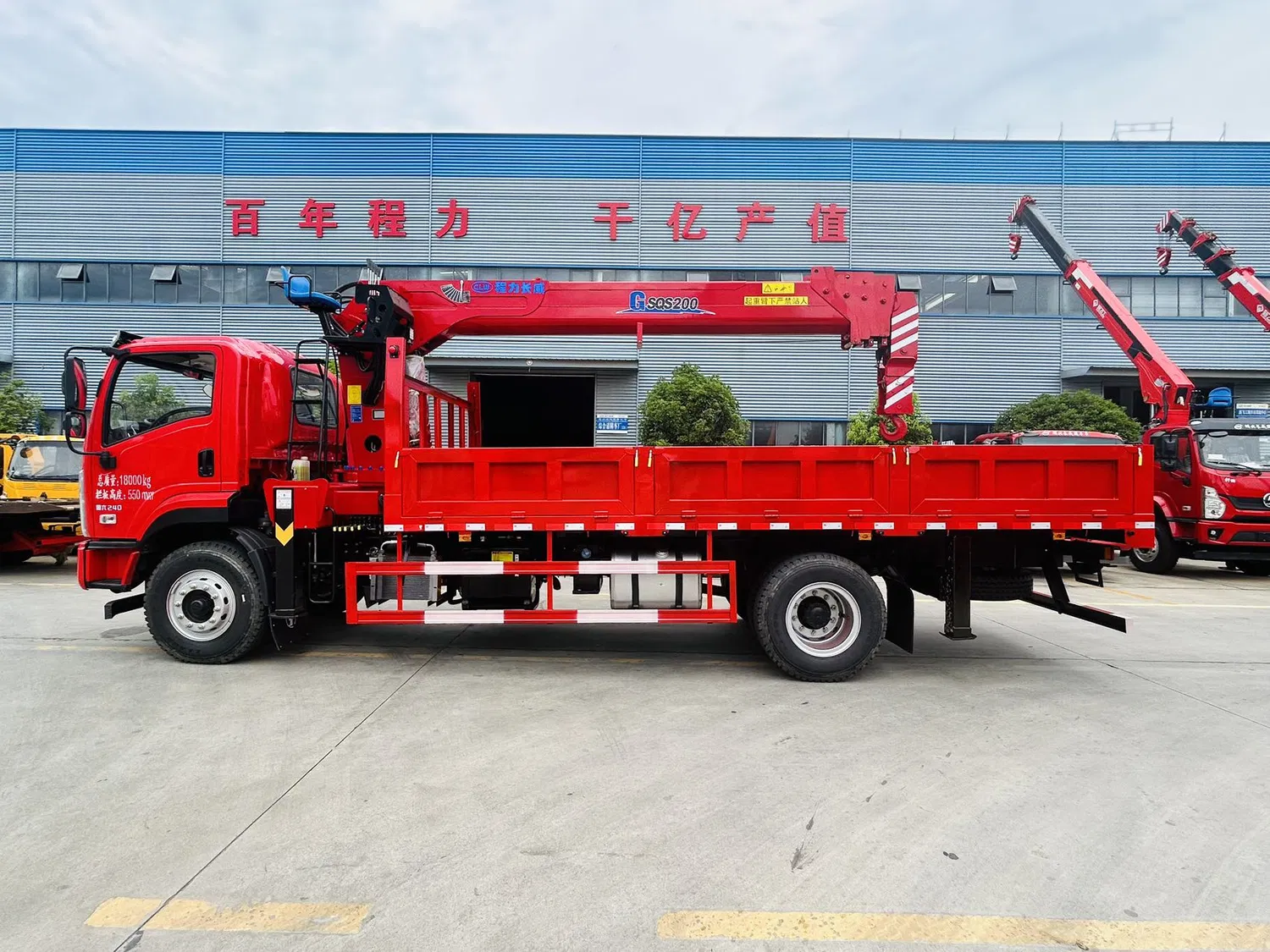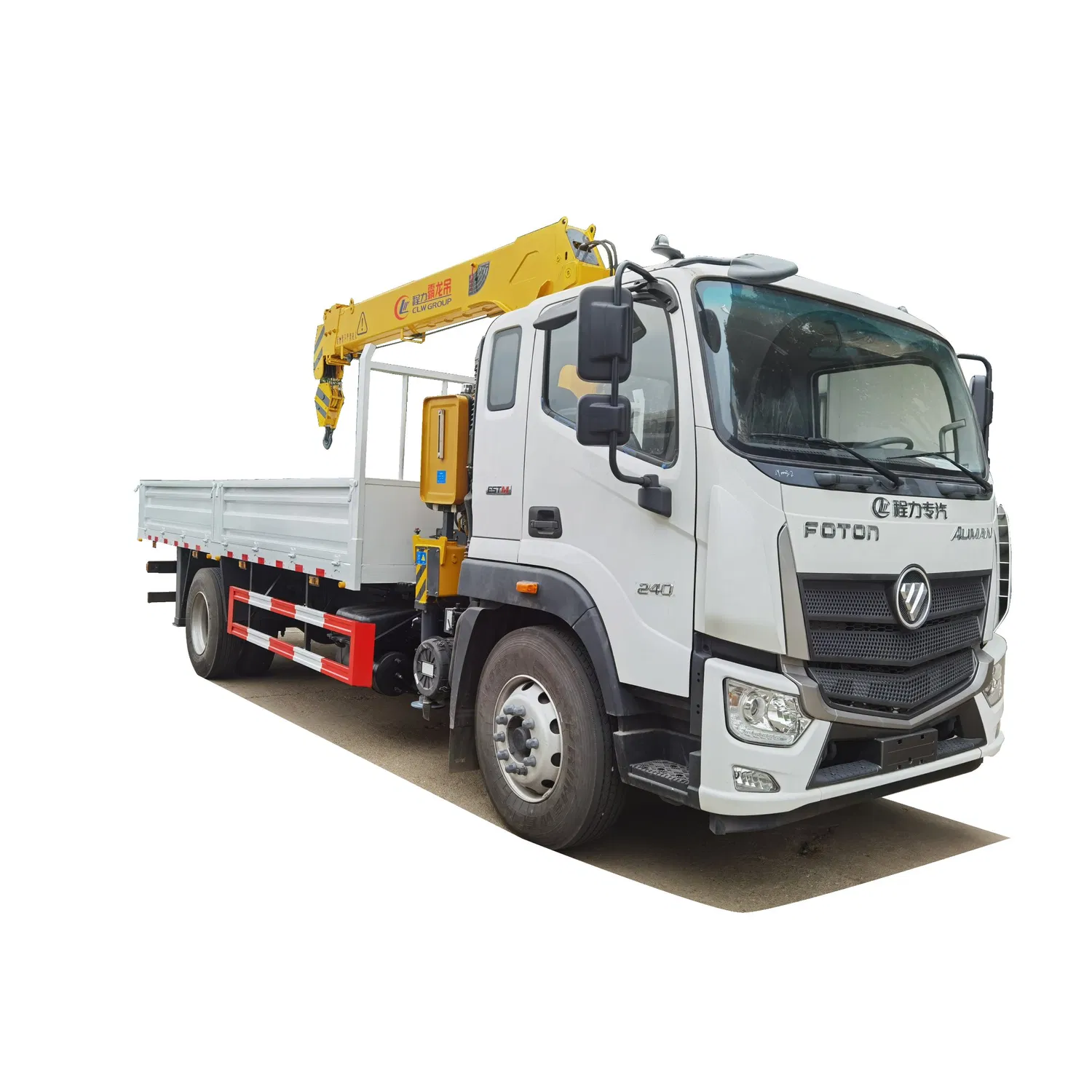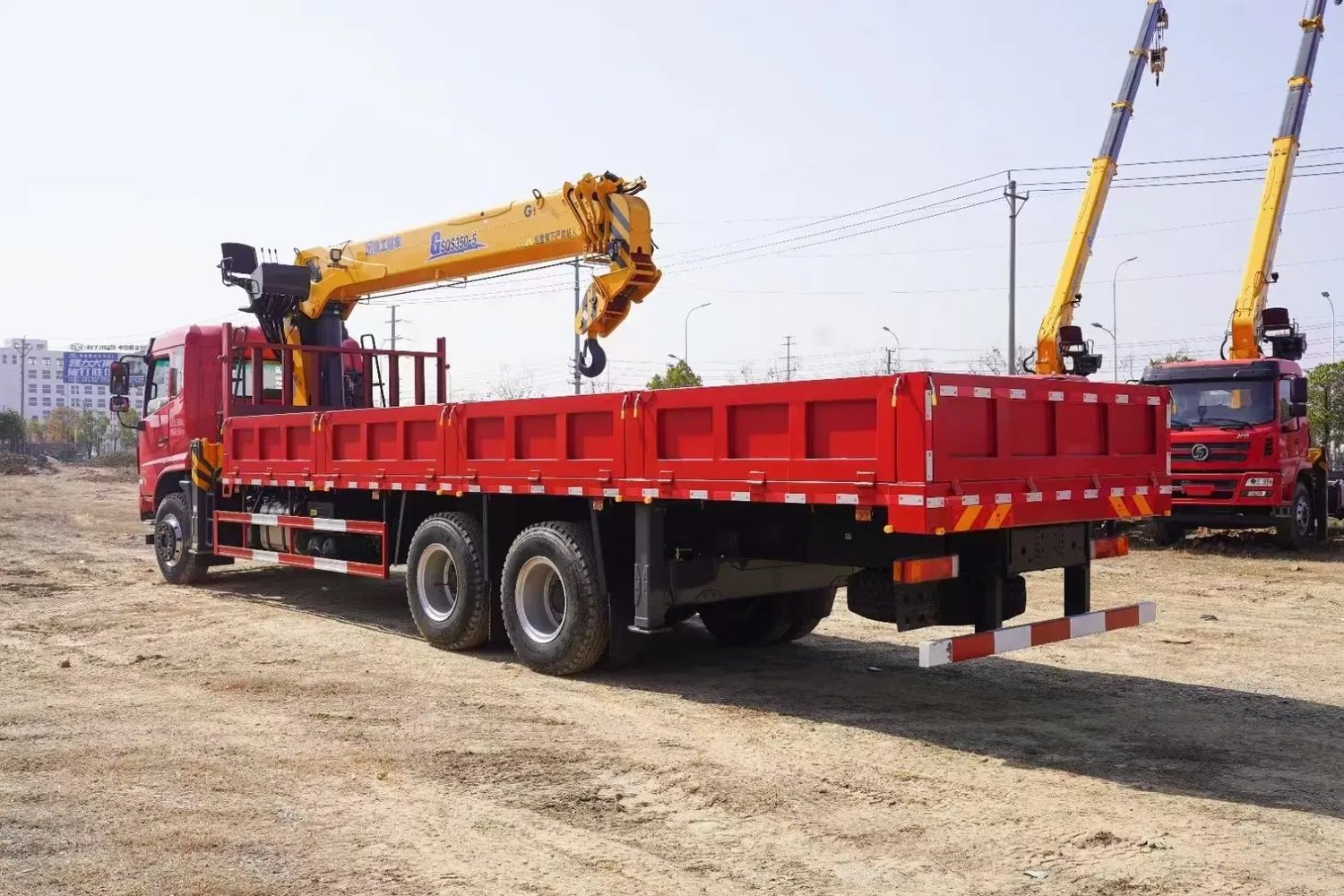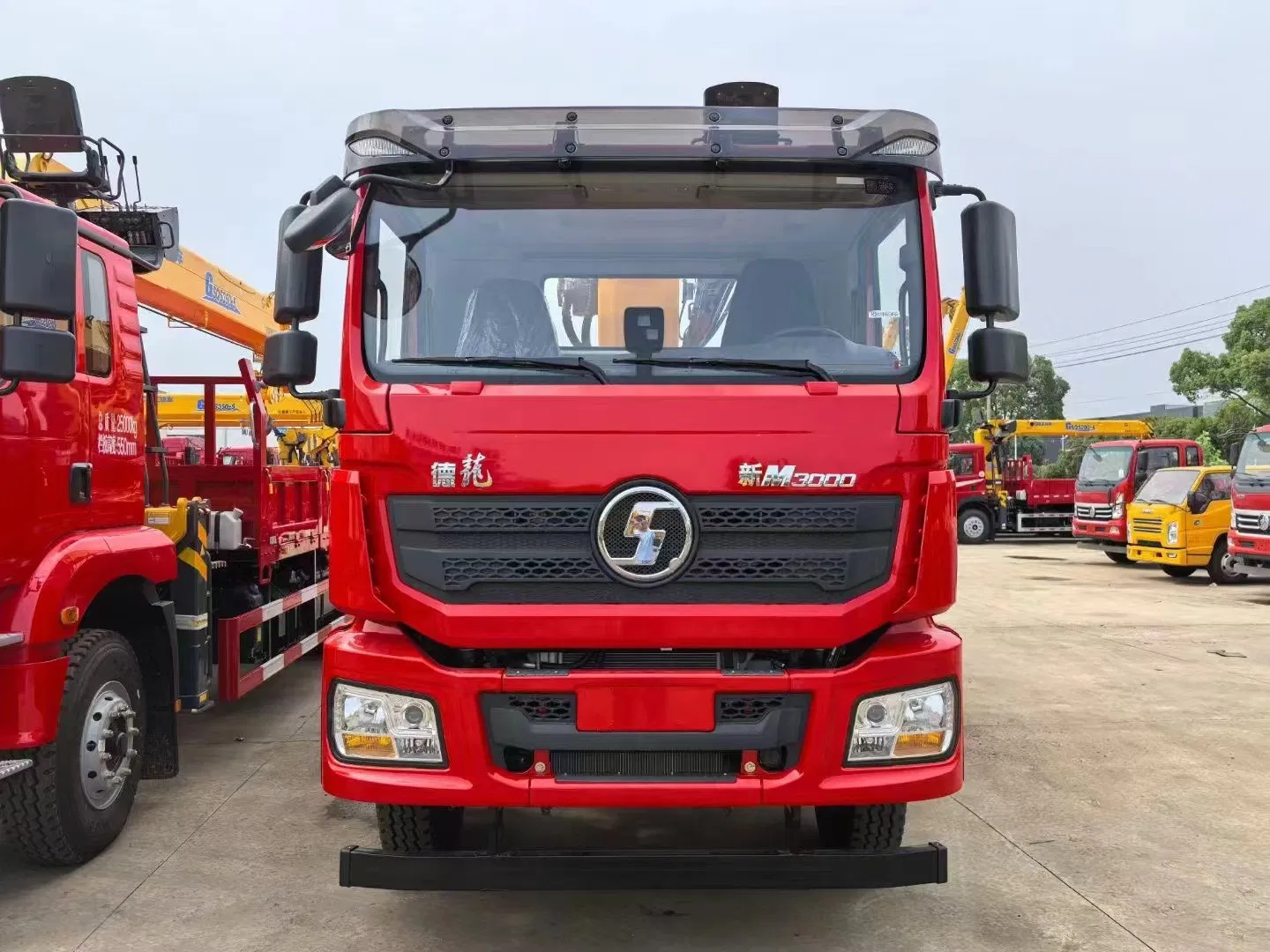
Telescopic vs Knuckle Boom Comparison Table
Both telescopic boom trucks and knuckle-boom truck-mounted cranes combine self-loading lifting power with flatbed cargo transport on a single commercial chassis, eliminating the need to hire a separate mobile crane at every drop point. However, their boom geometry creates very different working envelopes on African construction, utility, and mining sites.
| Comparison Factor | Telescopic Crane (Boom Truck / Straight Boom) | Knuckle-Boom Crane (Articulated / Folding Boom) | Site Selection Takeaway | Actions |
|---|---|---|---|---|
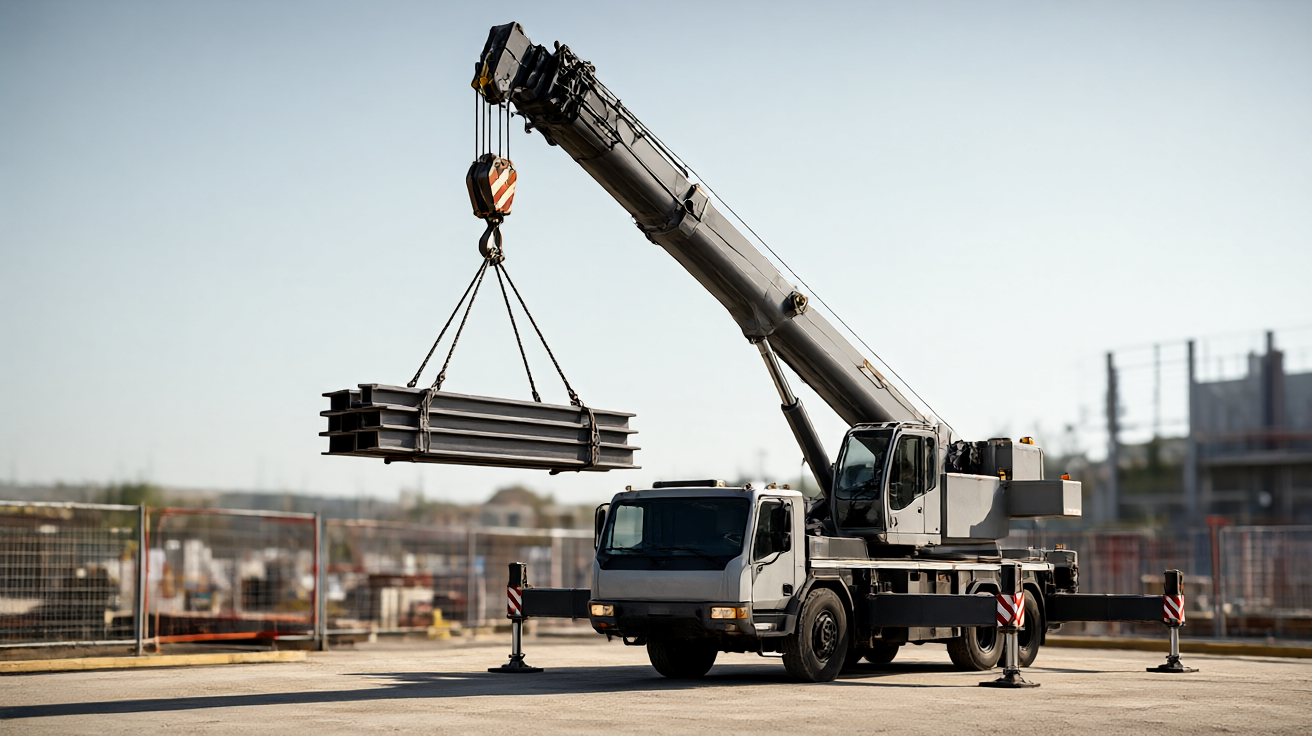
| Boom Structure & Hoist | Straight extending sections + hydraulic wire-rope winch & hook block | Articulated folding joints; hook mounted directly to boom tip (winch optional) | Winch cable lets telescopic booms lift vertically out of pits and over walls | View Models | Get Crane Quote |
| Stowed Footprint | Boom rests horizontally forward or backward over the cargo bed | Folds tightly sideways behind the cab (taking ~0.8–1.2 m) | Knuckle boom leaves full unobstructed height over the flatbed for tall machinery | View Models | Get Crane Quote |
| Load Curve & Reach | Longer horizontal outreach and vertical height per rated tonne | Stronger lifting capacity at short-to-medium radius; lighter crane tare weight | Pick telescopic for poles, steel trusses & containers; knuckle for heavy blocks & plant | View Models | Get Crane Quote |
| Operation & Maintenance | Simple levers (high-seat optional); fewer hydraulic cylinders and pin joints | Higher hydraulic precision; remote-control ready; more articulated pivot seals | Telescopic is easiest to repair in remote upcountry depots and mines | View Models | Get Crane Quote |
| Typical African Applications | Utility poles, transformers, culverts, steel rebar, telecom towers, rural building | Palletised bricks, generators, mine pumps, tight urban alleys, timber/scrap grapples | Match boom geometry to your heaviest daily lift and overhead clearance | View Models | Get Crane Quote |
Across Nigeria, Kenya, Tanzania, and Middle Eastern industrial zones, telescopic boom trucks remain the highest-volume choice for general contractors and utility companies because drivers master winch-and-boom controls rapidly and local hydraulic shops stock straight-cylinder seals easily. Knuckle-boom cranes dominate specialised logistics—such as brick/block delivery, mine maintenance support, and narrow urban installations—where compact folding and attachment versatility (pallet forks, augers, or clamshell buckets) pay off daily.
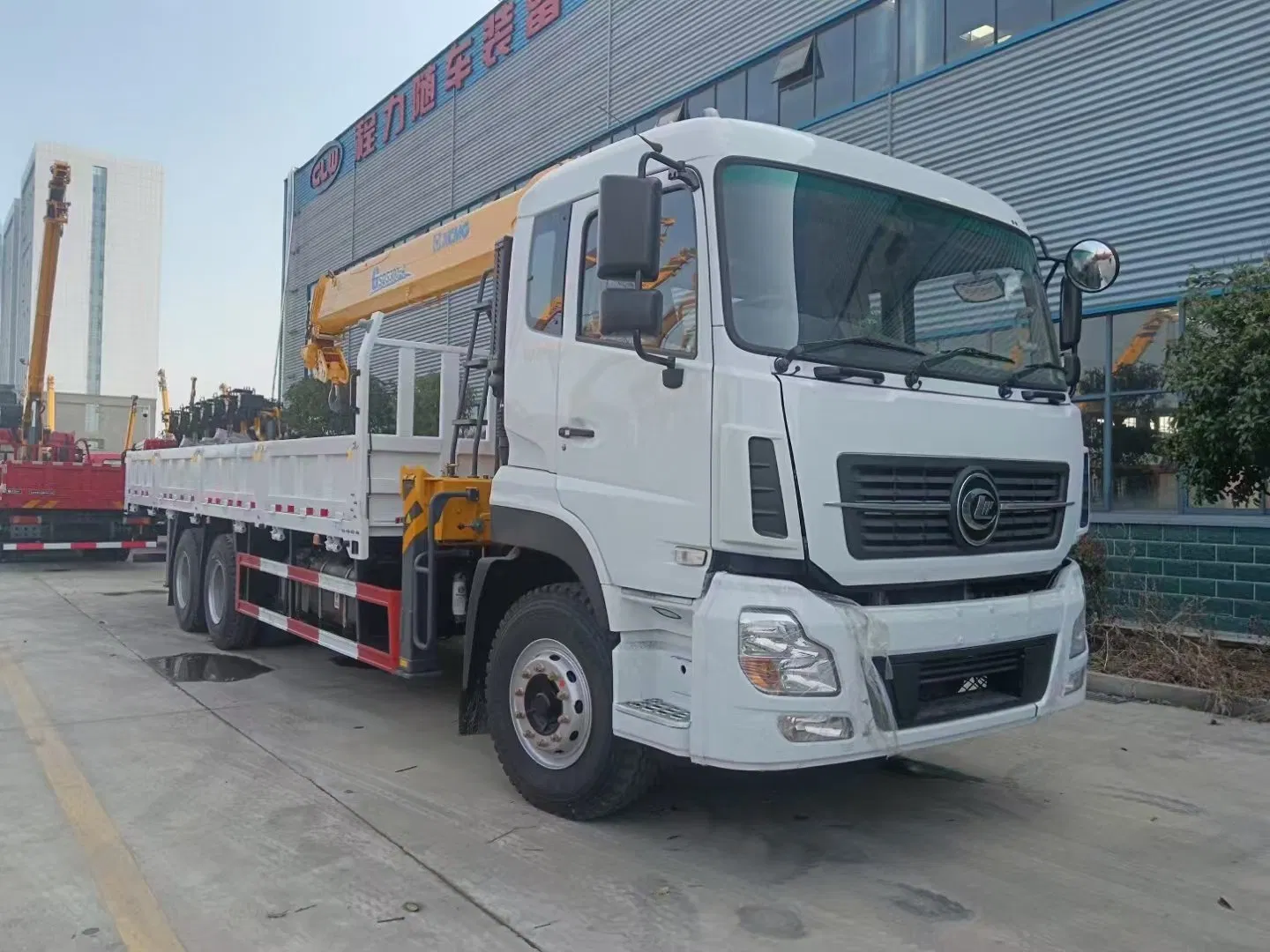
5-Ton 4x2 Telescopic Boom Crane Truck
5 t Max Lift | 4-Section Boom (~11 m Reach) | 5.2–5.8 m Cargo Box | Optional Crane Brands · Built on Sinotruk HOWO chassis · LHD / RHD
10-Ton 6x4 Heavy Utility Boom Truck
10 t Max Lift | 4–5 Section Boom (13–16 m Reach) | Rear Outriggers | 6.5–7.5 m Cargo Box · Built on Sinotruk HOWO chassis · LHD / RHD
How Lifting Capacity (3 t to 20 t) Affects Chassis & Price
A crane truck’s FOB price does not rise linearly with rated tonnage—jumping from a 5-tonne crane to a 16-tonne or 20-tonne crane triggers a major jump in base chassis GVWR, frame reinforcement, crane deadweight, and hydraulic stabiliser complexity. Because the crane itself weighs anywhere from 1.5 tonnes (on a 3–5 t unit) to over 7 tonnes (on a 16–20 t unit), an undersized chassis will crack its rails or tip forward under load.
Note on pricing validity: Crane unit prices vary significantly by optional crane brand (proven Chinese heavy-duty crane units vs. international European brands, all available as optional builds), boom section count, and LHD/RHD chassis availability. Written FOB/CIF quotes with a fixed validity window are issued per lifting specification.
| Rated Lifting Tier (Tonnes) | Required Chassis & Drive | Typical Max Working Radius (m) | Cargo Box Length (m) & Cost Drivers | Actions |
|---|---|---|---|---|
| 3 – 5 Tonnes | 4x2 Light / Medium (10–16 t GVWR) | 8 – 11.5 m (3–4 boom sections) | 4.2 – 5.8 m box; entry cost tier; ideal for urban hardware, streetlights & small generators | View Models | Get Crane Quote |
| 8 – 10 Tonnes | 4x2 Heavy or 6x4 (18–25 t GVWR) | 12 – 16 m (4–5 boom sections) | 6.2 – 7.5 m box; most popular commercial tier; front + rear hydraulic outriggers add stability & cost | View Models | Get Crane Quote |
| 12 – 16 Tonnes | 6x4 or 8x4 Heavy (25–31 t GVWR) | 15 – 19.5 m (4–5 boom sections) | 7.2 – 8.5 m box; major price step due to heavy double-layer sub-frame, high-seat controls & double-stage outriggers | View Models | Get Crane Quote |
| 18 – 20 Tonnes | 8x4 Heavy-Duty (31–40 t GVWR) | 18 – 22+ m (5 boom sections) | 7.8 – 8.5 m box; top rigid crane tier; heavy counter-stability, oil cooler, wireless remote & high-output PTO pump | View Models | Get Crane Quote |
Explore complete tonnage configurations on our truck-mounted cranes hub, or review severe-duty service builds on our mining trucks solutions page.
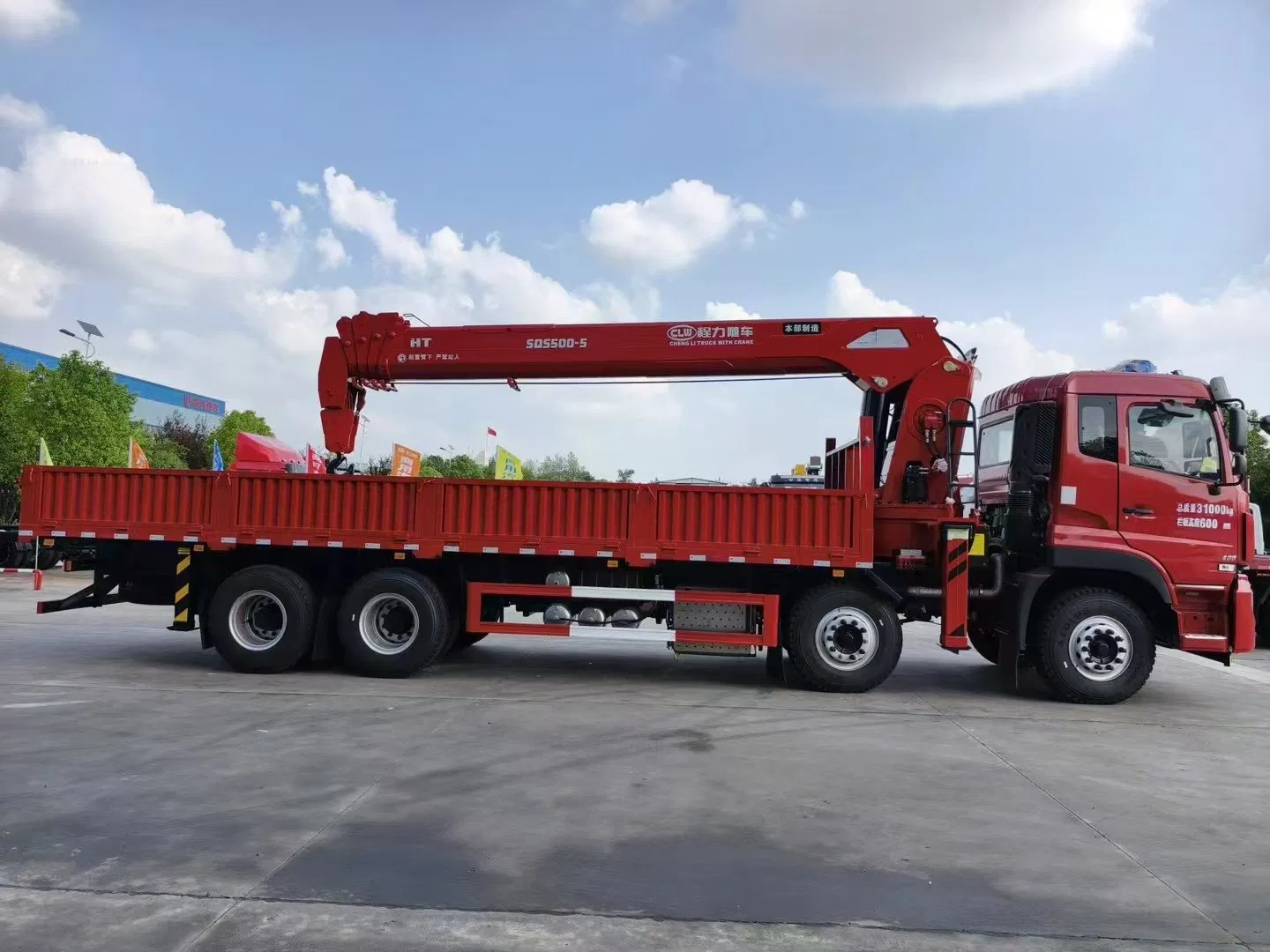
16-Ton 8x4 Heavy Construction & Mining Crane Truck
16 t Max Lift | 5-Section Boom (~18.5 m Reach) | Double-Stage Outriggers | High-Seat Control · Built on Shacman chassis · LHD / RHD
20-Ton 8x4 Heavy Knuckle-Boom Crane Truck
20 t Max Lift | Folding Articulated Boom | Wireless Remote (Optional) | 8.2 m Heavy Flatbed · Built on Shacman chassis · LHD / RHD
Reading a Crane Load Chart: Why Max Lift ≠ Lift at Full Reach
The single most frequent specification error buyers make is ordering a "10-ton crane" expecting it to lift a 10-tonne diesel generator or 20-foot loaded container 10 metres away from the truck. A truck-mounted crane’s headline tonnage rating applies only at minimum working radius—typically 2.0 to 2.5 metres from the slewing column centreline.
How Lifting Moment (Tonne-Metres) Governs Real-World Lifts
Every crane is engineered around a maximum lifting moment measured in tonne-metres (t·m) (Load Weight × Horizontal Distance from the crane centreline):
- Example — Typical 10-Tonne Telescopic Crane (~25 t·m rating):
- At 2.5 m radius (right next to the truck bed): lifts up to 10,000 kg (10 t).
- At 5.0 m radius (adjacent lane or low wall): drops to roughly 4,500 – 5,000 kg.
- At 8.0 m radius (across a roadside ditch): drops to roughly 2,600 – 3,000 kg.
- At 12.0 – 14.0 m full reach: drops to roughly 1,200 – 1,800 kg.
- Practical Sizing Rule: Always size your crane from the heaviest object multiplied by the farthest horizontal distance you must place it, then add a 15% to 20% safety margin for hook block, slings, and uneven site ground. If you regularly need to lift a 4-tonne transformer 6 metres off the side of the truck (24 t·m required), a 10-tonne crane is your minimum safe tier—not a 5-tonne crane.
- Safety Systems to Specify: Confirm that your crane build includes hydraulic over-load protection valves, boom-angle indicators, winch over-winding limit switches (anti-two-block), and an optional moment limiter display for regulated industrial and mining sites.
Matching Cargo Box Length, Outriggers & LHD/RHD Chassis
A reliable crane truck is an integrated engineering assembly—not simply a crane bolted onto a standard cargo truck. Getting the sub-frame, wheelbase, outrigger span, and remaining legal payload right prevents cracked chassis rails and unstable lifts.
Four Structural Checks Before Ordering
- Full-Length Reinforced Sub-Frame: Crane pedestals generate intense twisting torque immediately behind the cab. Specify a continuous box-section high-tensile steel sub-frame running from the front cab mount all the way to the rear bumper, with reinforced fish-plate brackets at the crane mounting zone.
- Outrigger Configuration (Front + Rear Stabilisers):
- 3 t – 5 t cranes: Standard single-stage front hydraulic outriggers are usually sufficient on firm ground.
- 8 t – 12 t cranes: Specify wide-span double-stage front outriggers plus rear hydraulic stabiliser legs to stop the rear suspension from flexing when lifting heavy loads off the tail of the truck.
- 14 t – 20 t cranes: Mandatory double-stage front outriggers, hydraulic rear stabilisers, and high-capacity hydraulic oil coolers for continuous lifting in 40°C+ African or Middle Eastern heat.
- Cargo Box Length vs. Net Payload: Remember that Net Legal Cargo Payload = Chassis Rated Payload − (Crane Deadweight + Sub-Frame + Cargo Box Weight). On a 6x4 chassis rated for 20 tonnes, installing a 10-tonne crane (~4.0 t deadweight) and heavy flatbed (~2.2 t) leaves roughly 13 to 14 tonnes of legal cargo capacity in the 6.5–7.5 m box. Drop-side steel cargo walls with reinforced 4–5 mm chequered steel floors allow easy forklift loading alongside crane lifts.
- Chassis & LHD/RHD Alignment: Standard 5 t to 12 t builds pair smoothly with trucks built on Sinotruk HOWO chassis or built on Isuzu chassis (especially for East African RHD urban utility fleets). Heavy 12 t to 20 t mine and industrial builds frequently utilise double-layer 8+8 mm frames built on Shacman chassis or heavy-duty Sinotruk HOWO 8x4 chassis. Factory RHD builds for Kenya, Tanzania, Uganda, and Zambia require slightly longer chassis lead times than continuous LHD production for Nigeria, Ghana, and Iraq.
Compliance & pricing note (Last updated: November 2026): Crane brands (domestic heavy-duty or international brands) and optional attachments (personnel baskets, augers, log/brick grapples, wireless remote controls) are supplied as configurable options. Final FOB and CIF quotations are confirmed in writing per lifting chart and destination port.