Matching Reefer Capacity & Temp Zones to Cargo Types
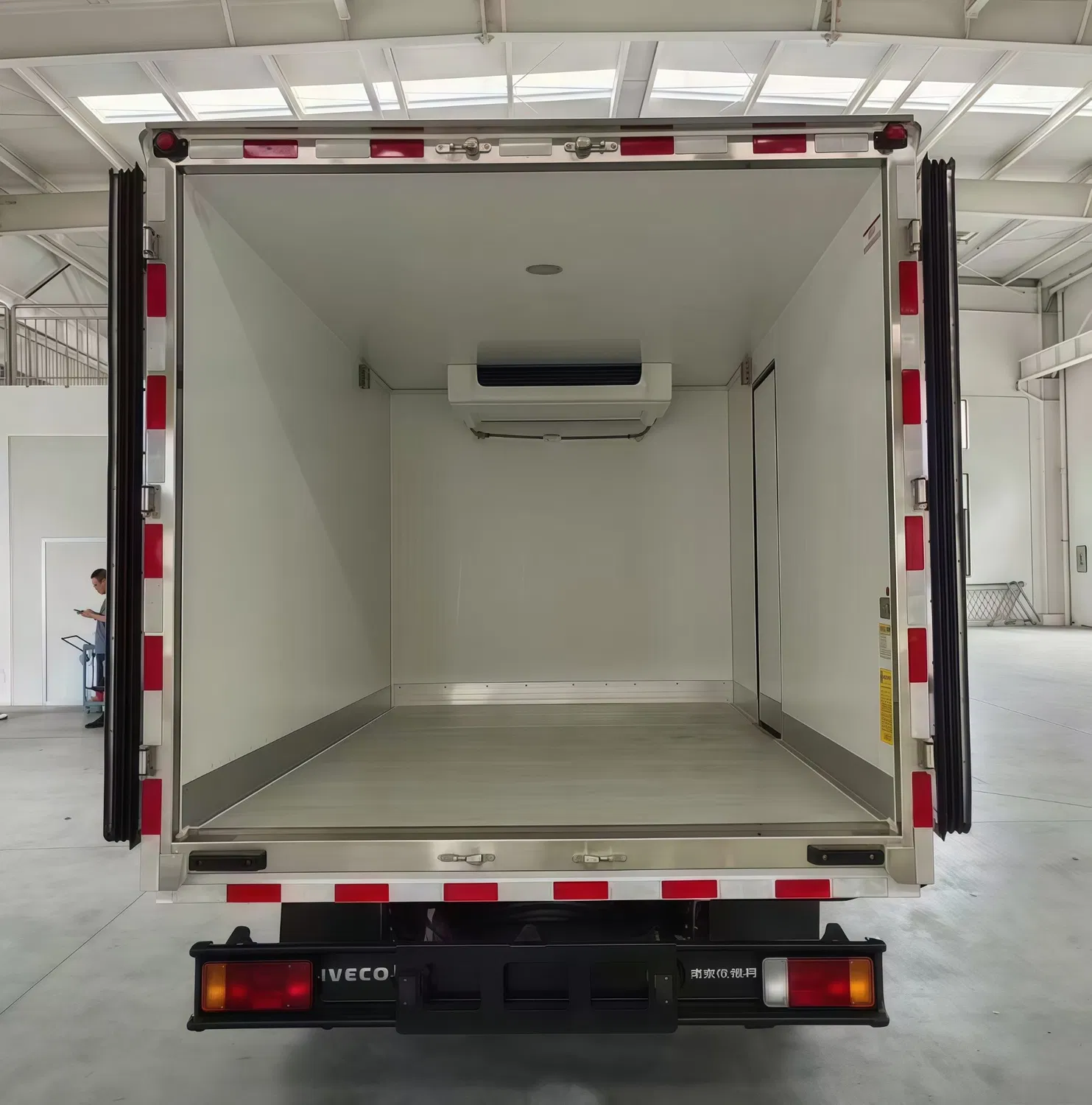
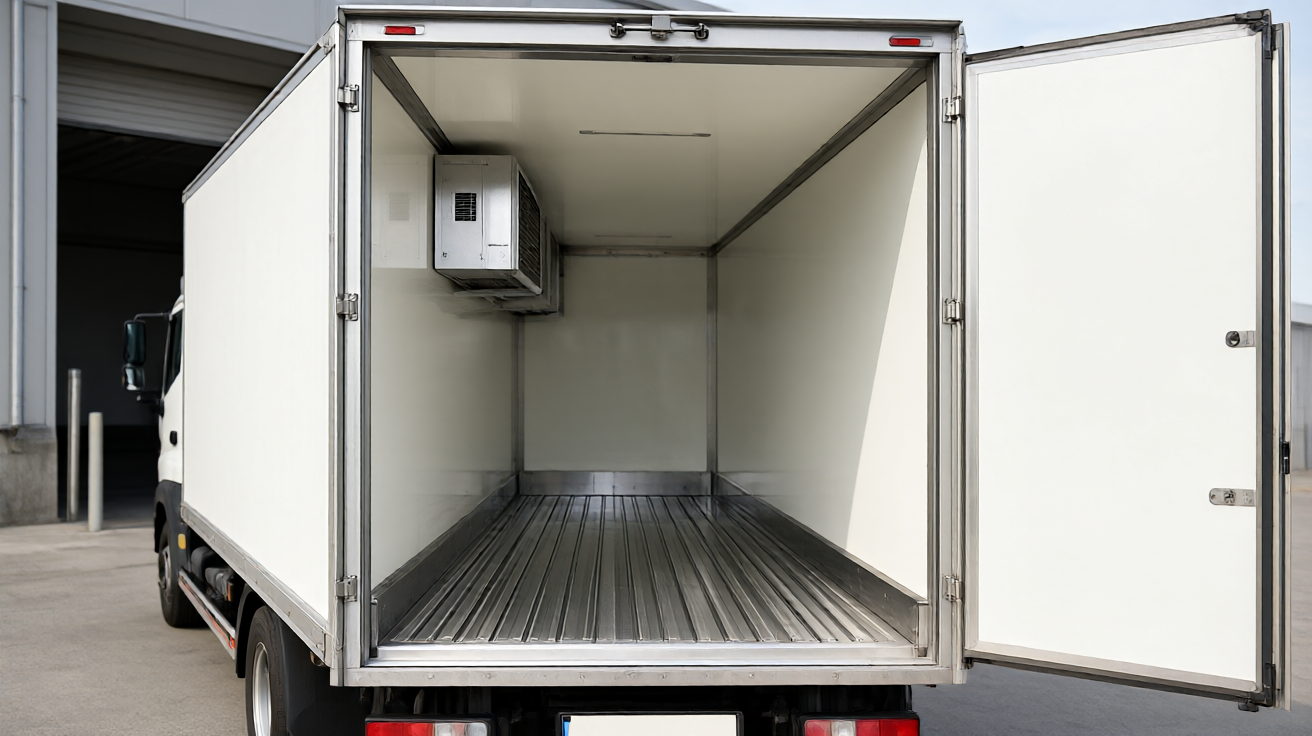
The biggest mistake buyers make when sizing a reefer truck is choosing box length by tonnage alone without accounting for cargo bulk density and airflow clearance. A refrigerated box must never be packed tight to the roof or walls; cold air requires roughly 15% to 20% unobstructed internal circulation space around pallets, crates, or hanging carcasses to prevent hot spots.
| Cargo Category | Target Temp Zone (°C) | Recommended Box Size & Payload | Key Interior & Cooling Spec | Actions |
|---|---|---|---|---|
| Fresh Produce, Flowers & Bakery | +2°C to +12°C (Chilled) | 3.8 – 6.2 m (15–32 m³ / 2–8 t) | 80 mm PU insulation, high-airflow evaporator, T-floor ventilation, precise thermostat | View Models | Get FOB Quote |
| Pasteurised Dairy, Yoghurt & Beverages | +2°C to +6°C (Tight Chilled) | 4.2 – 7.6 m (18–44 m³ / 3.5–12 t) | 80 mm PU panels, side curb door + PVC strip curtains for rapid multi-drop recovery | View Models | Get FOB Quote |
| Fresh Chilled Meat Carcasses | 0°C to +4°C (Heavy Roof Load) | 4.2 – 7.8 m (18–46 m³ / 3.5–12 t) | Reinforced roof frame + 304 stainless meat-hanging rails, floor drainage, 100 mm PU | View Models | Get FOB Quote |
| Frozen Fish, Poultry & Ice Cream | -18°C to -20°C (Deep Freeze) | 5.2 – 9.6 m (25–58 m³ / 5–20 t) | 100 mm high-density PU panels, high-capacity unit, independent diesel for long hauls | View Models | Get FOB Quote |
| Mixed Supermarket & Hotel Supply | -18°C Front / +4°C Rear (Dual-Zone) | 5.2 – 8.6 m (25–52 m³ / 5–16 t) | Movable insulated partition wall, dual-evaporator system, side + rear access doors | View Models | Get FOB Quote |
Compare complete chassis-and-box builds across our refrigerated trucks hub. If you operate in Kenya, Tanzania, Uganda, or Southern Africa, see our RHD refrigerated trucks section and East Africa RHD CIF guide for factory right-hand-drive options.
Quick Capacity Formula for Fleet Planners
To avoid buying a truck that is too tight on volume or overloaded on rear axles:
- Calculate Effective Internal Volume: Subtract 200–240 mm from external box length, width, and height to account for 80–100 mm insulated walls, then multiply by 0.80 to 0.85 to reserve mandatory air-circulation gaps (top plenum, return-air bulkhead, and floor channels).
- Check Pallet & Crate Count: Standard Euro pallets (1,200 × 800 mm) or ISO pallets (1,200 × 1,000 mm) determine whether you need a 2.1 m internal width (urban 4x2) or a 2.35–2.42 m wide-body box (6.2–9.6 m highway trucks allowing two Euro pallets side-by-side).
- Verify Hanging vs. Stacked Centre of Gravity: Fresh beef or goat carcasses hung on overhead stainless rails raise the centre of gravity substantially. Always specify factory roof-truss reinforcement and heavy-duty anti-roll stabiliser bars on the chassis when ordering meat-hook reefers.
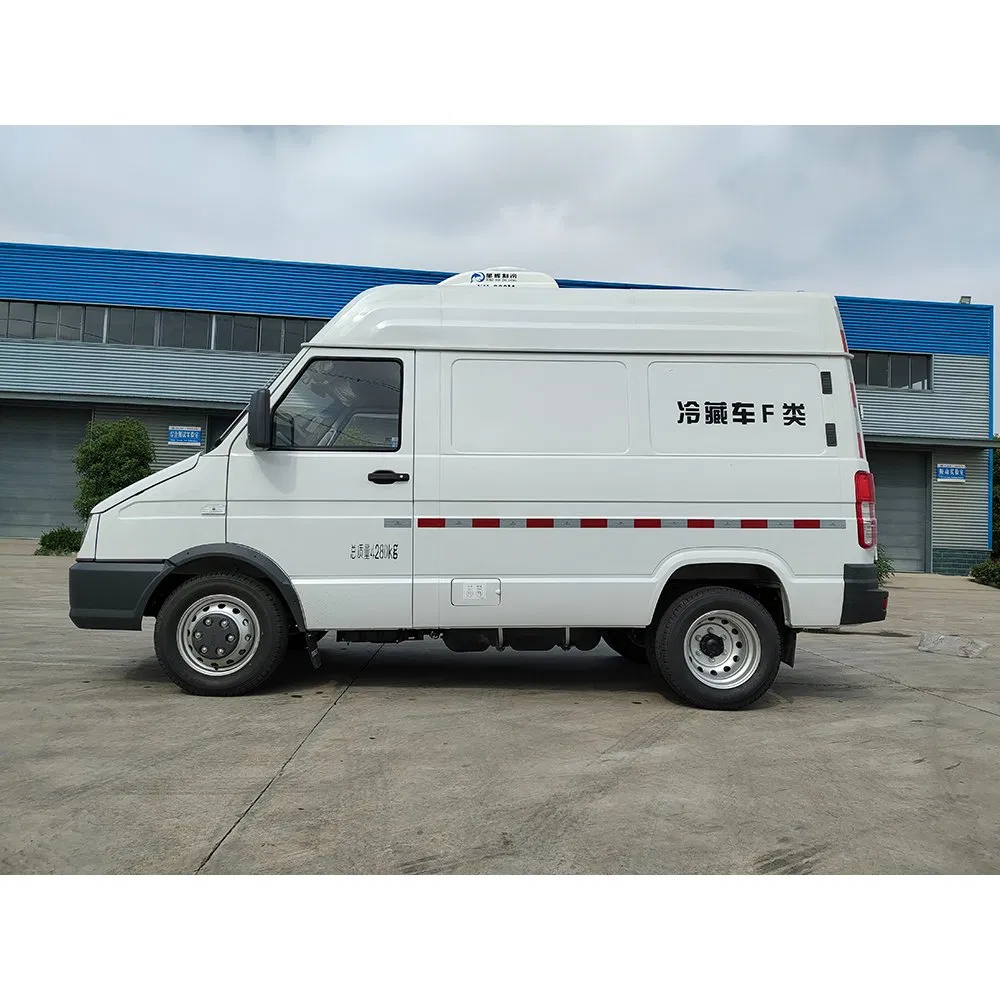
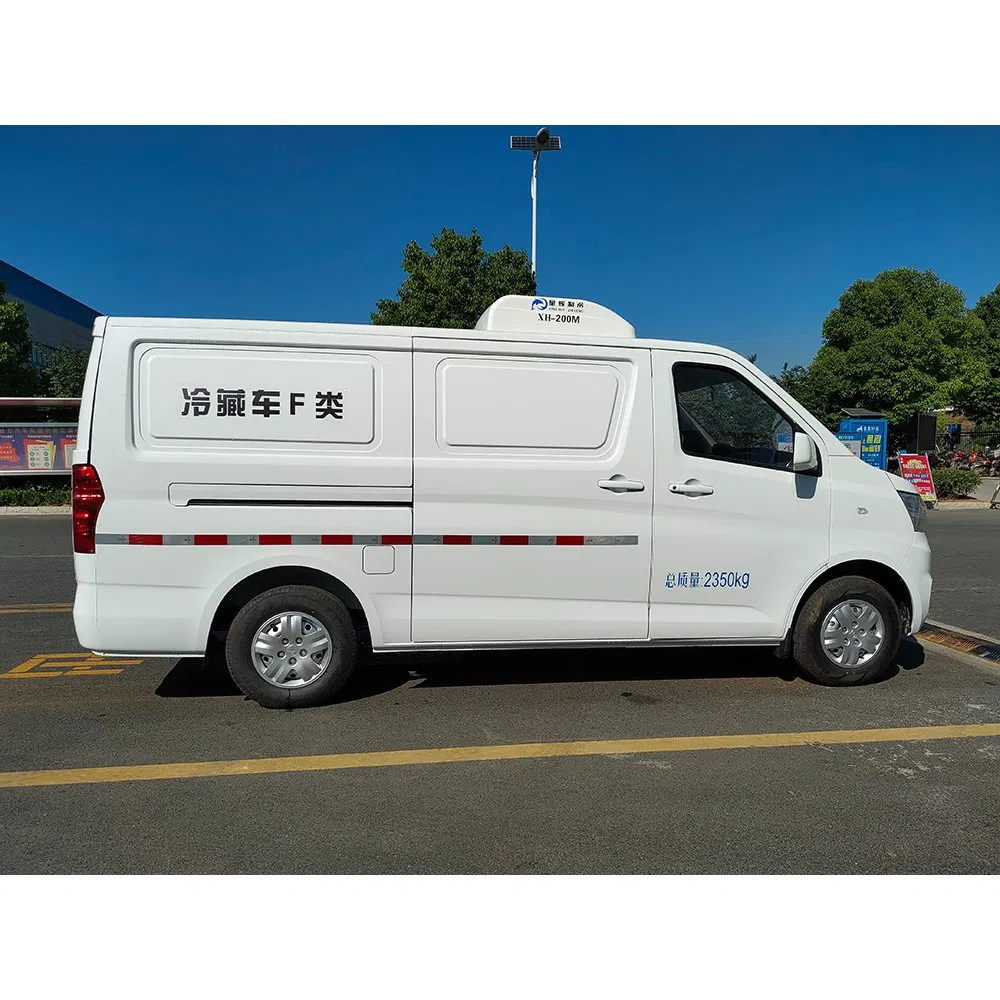
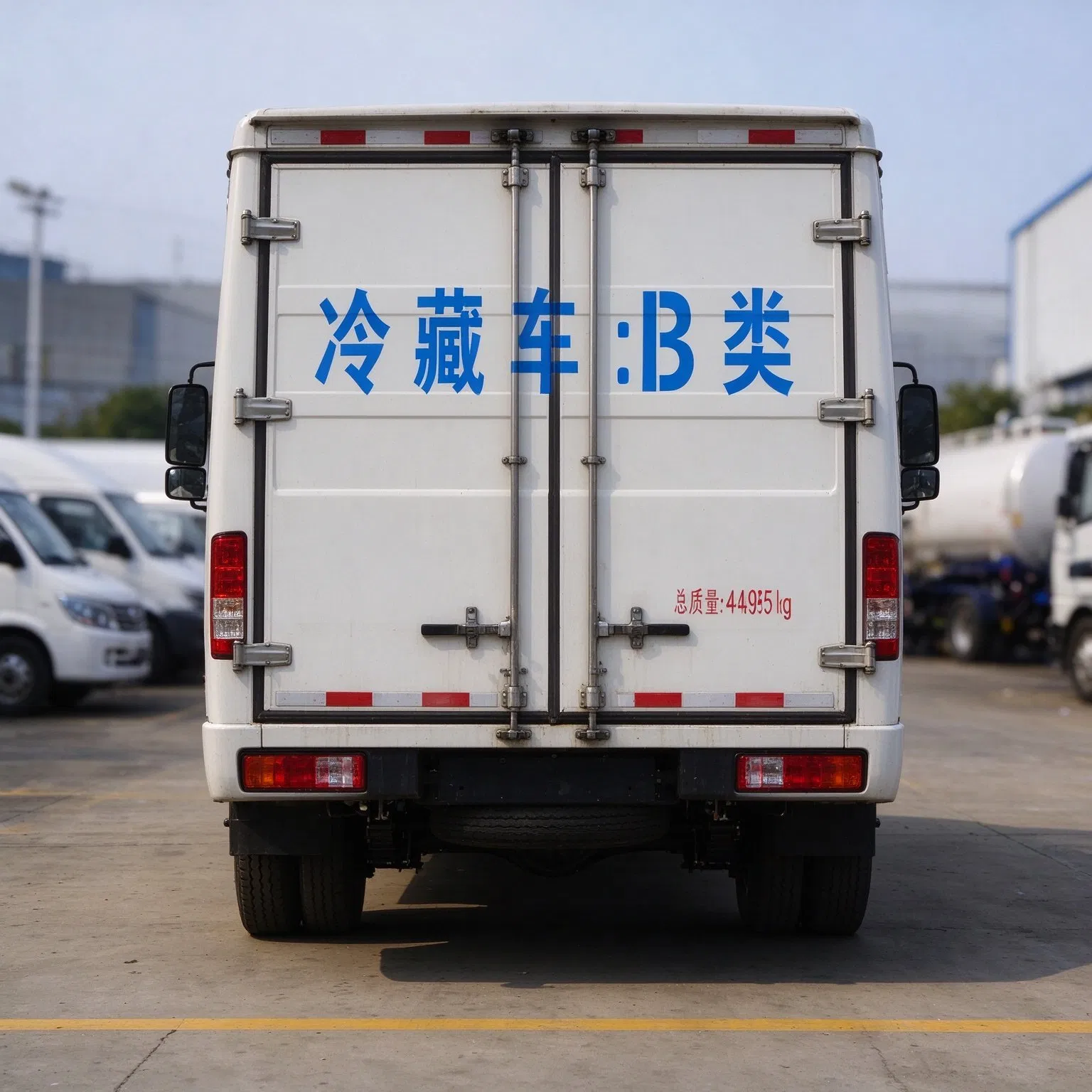
4.2 m Light Urban Refrigerated Delivery Truck
16 m³ | 3–3.5 t Payload | -18°C or +2°C to +8°C | Engine-Driven Unit (Optional Brands) · Built on Isuzu chassis · LHD / RHD
6.2 m Medium Regional Cold-Chain Truck
30 m³ | 6–8 t Payload | 80–100 mm PU Foam | Side Door & Dual-Temp Partition Optional · Built on Sinotruk HOWO chassis · LHD / RHD
Non-Independent vs Independent Cooling Units: Which Fits Your Route?
The refrigeration unit is the heartbeat of a cold-chain truck. Selecting between a non-independent (engine-driven) unit and an independent (self-powered diesel) unit determines whether your cargo survives an unexpected traffic jam, ferry crossing, border delay, or overnight loading stop. Cooling unit brands—including Tier-1 international units (such as Thermo King or Carrier) and proven heavy-duty Chinese units—are supplied as optional packages matched to your budget and local service network.
1. Non-Independent (Direct-Drive / Engine-Driven) Units
- How It Works: A belt-driven compressor mounts directly to the truck’s main diesel engine, powering the roof/front-wall condenser and interior evaporator whenever the truck engine runs.
- Best Fit: Compact 3.5 m to 6.2 m urban and regional trucks completing daily routes inside 6 to 10 hours where trucks return to a depot every evening.
- Strengths & Limits: Significantly lower upfront cost, lighter deadweight (~150–250 kg lighter than independent diesel units), and minimal extra engine maintenance. However, cooling capacity fluctuates with engine RPM and stops immediately when the driver shuts off the ignition—unless an electric standby plug-in is installed.
2. Independent (Self-Powered Diesel) Units
- How It Works: Houses its own dedicated 3- or 4-cylinder diesel engine and fuel supply inside the nose-mounted unit above the cab, running completely independently of the truck chassis.
- Best Fit: 6.8 m to 9.6 m intercity and cross-border heavy reefers (such as Mombasa–Kampala, Lagos–Abuja, or Dar es Salaam–Lusaka), deep-freeze (-20°C) haulage, and high-value pharmaceutical or export horticulture loads.
- Strengths & Limits: Maintains full cooling output at idle, overnight at customs borders, or even if the truck engine breaks down waiting for a mechanic. Carries a higher acquisition price, adds ~400–600 kg on the front axle, and requires scheduled servicing on its auxiliary diesel engine.
3. Electric Standby (220V / 380V Plug-In) — Smart Upgrade for Both
Adding an optional 220V single-phase (for light trucks) or 380V three-phase (for medium/heavy trucks) electric standby motor lets you plug the reefer directly into warehouse grid power overnight. Drivers pre-cool the box silently before loading without burning truck diesel, and depots can use parked trucks as overflow cold storage during peak harvest or holiday seasons.
7.6 m Dual-Temp Intercity Refrigerated Truck
44 m³ | 10–12 t Payload | -20°C / +4°C Dual Zone | Independent Diesel Unit (Optional) · Built on Sinotruk HOWO chassis · LHD / RHD
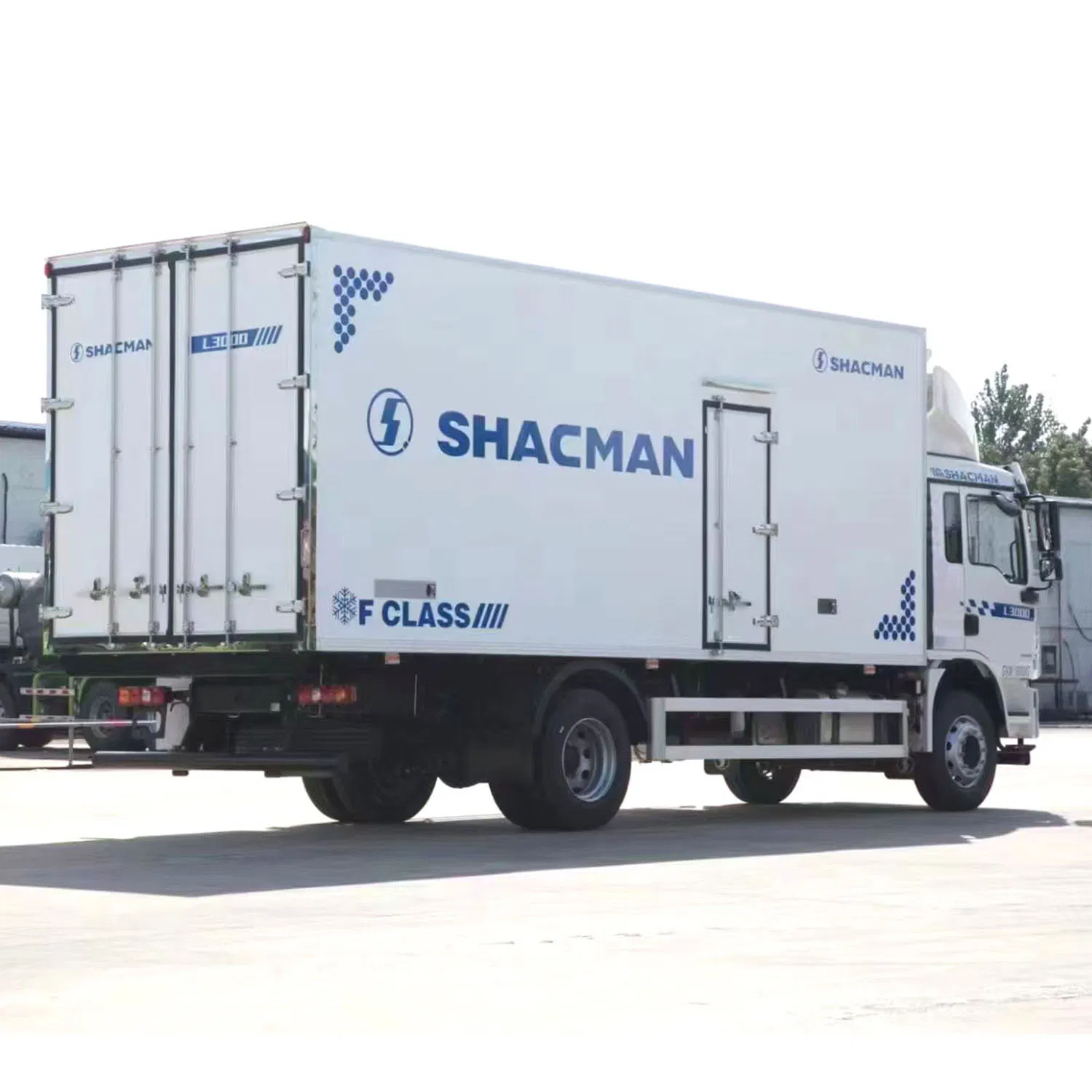
9.6 m 6x4 Long-Haul Deep-Freeze Reefer Truck
56 m³ | 16–20 t Payload | 100 mm PU Box | Independent Diesel + 380V Standby (Optional) · Built on Shacman chassis · LHD / RHD
Insulated Box Engineering for +40°C Tropical Climates
Even a top-tier cooling unit cannot hold -18°C inside a poorly insulated box baking in +40°C equatorial sun. Thermal leakage through thin panels, steel rivets, or warped door gaskets forces compressors to run at 100% duty cycle—tripling fuel burn and causing premature compressor failure.
- Closed-Cell Polyurethane (PU) Core Thickness: Specify 80 mm high-density (~40–42 kg/m³) extruded/injected polyurethane foam panels for chilled (+2°C to +12°C) operations, and 100 mm wall/roof/floor thickness for deep-freeze (-18°C to -20°C) duty in hot coastal or savannah regions.
- Vacuum-Bonded FRP / GRP Skins: High-pressure vacuum-laminated fibreglass (FRP/GRP) inner and outer skins eliminate air pockets, resist salt-air corrosion along coastal ports (Mombasa, Lagos, Dar es Salaam), clean easily with pressure washers for food hygiene audits, and stay cooler under direct sun than dark painted steel.
- Thermal-Bridge Prevention & 304 Stainless Hardware: Avoid cheap riveted boxes where external metal bolts touch internal framing and conduct heat straight into the cargo bay. Insist on composite thermal-break sub-frames, 304 stainless-steel rear door frames, hinges, and cam locks, plus multi-blade EPDM rubber door seals.
- Door Opening Protection & Floor Airflow: Multi-drop urban trucks lose huge thermal mass every time rear doors swing open. Fit a curbside side access door (smaller opening area than full double rear doors), heavy-duty overlapping PVC strip curtains, and extruded aluminium T-shaped ventilation flooring so cold air sweeps cleanly underneath pallets back to the return bulkhead.
Matching Chassis, Axle Load & Budget Priorities
A refrigerated body plus cooling unit weighs substantially more than an open flatbed or dry cargo box—and an independent nose-mounted unit puts concentrated weight directly over the front steering axle. Selecting the right base chassis protects suspension life and highway weighbridge compliance:
- Light Urban Delivery (3.5 – 4.8 m / 1.5 – 4 t Payload): Trucks built on Isuzu chassis or Foton / Dongfeng chassis (4x2, LHD or RHD) deliver tight urban turning circles and low stop-start fuel consumption for supermarkets, dairies, and bakeries.
- Medium Regional Distribution (5.2 – 6.8 m / 5 – 10 t Payload): Trucks built on Sinotruk HOWO chassis, Isuzu, or Dongfeng chassis (heavy 4x2) balance strong front-axle load ratings with wide-body 2.35 m pallet clearance.
- Heavy Intercity & Cross-Border Trunking (7.6 – 9.6 m / 12 – 20 t Payload): Trucks built on Sinotruk HOWO chassis or Shacman chassis (6x2 or 6x4 with 280–380 hp engines and reinforced leaf or optional air suspension) carry heavy frozen loads smoothly across long highway corridors. For a complete breakdown of acquisition budgets across all four weight brackets, review our refrigerated truck pricing guide.
Engineering & compliance note (Last updated: November 2026): Remember that truck refrigeration units are engineered to maintain cargo temperature during transit, not to blast-freeze warm product from ambient +30°C down to -18°C. Always pre-cool both the cargo box and the product in a static cold room prior to loading.