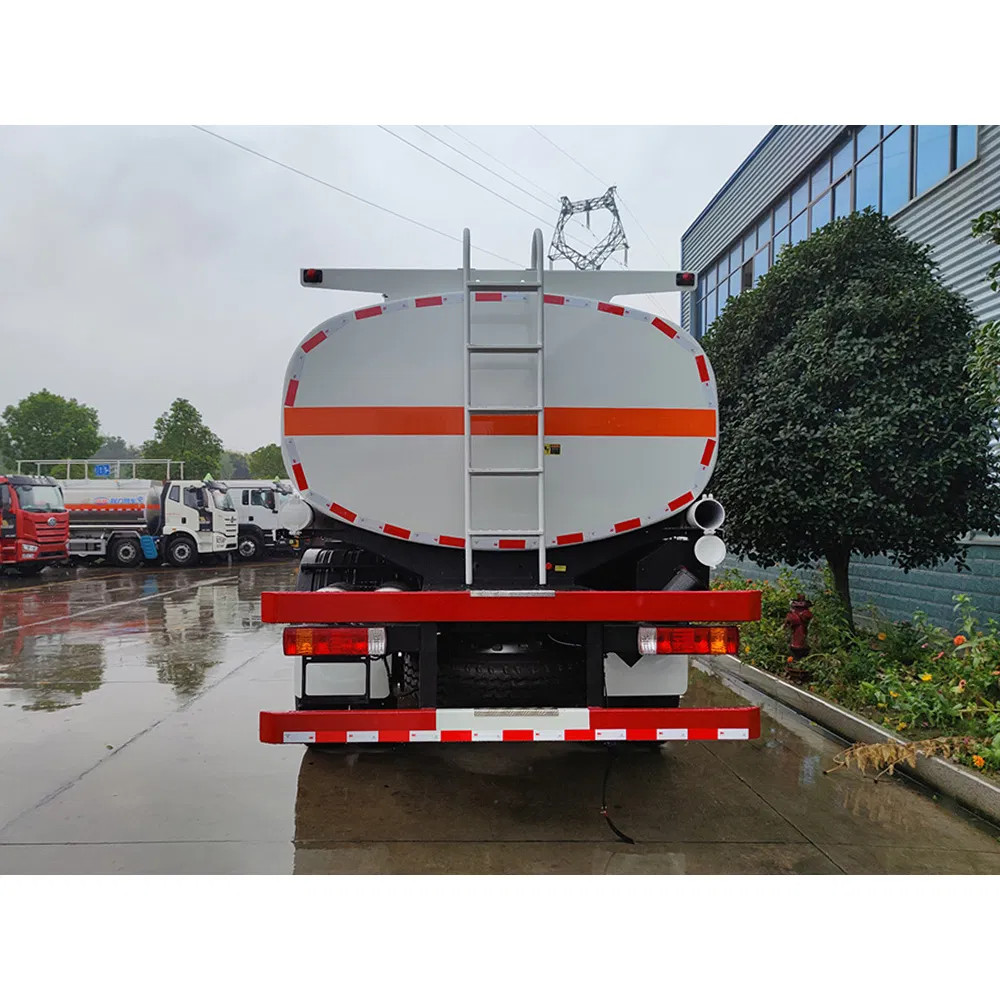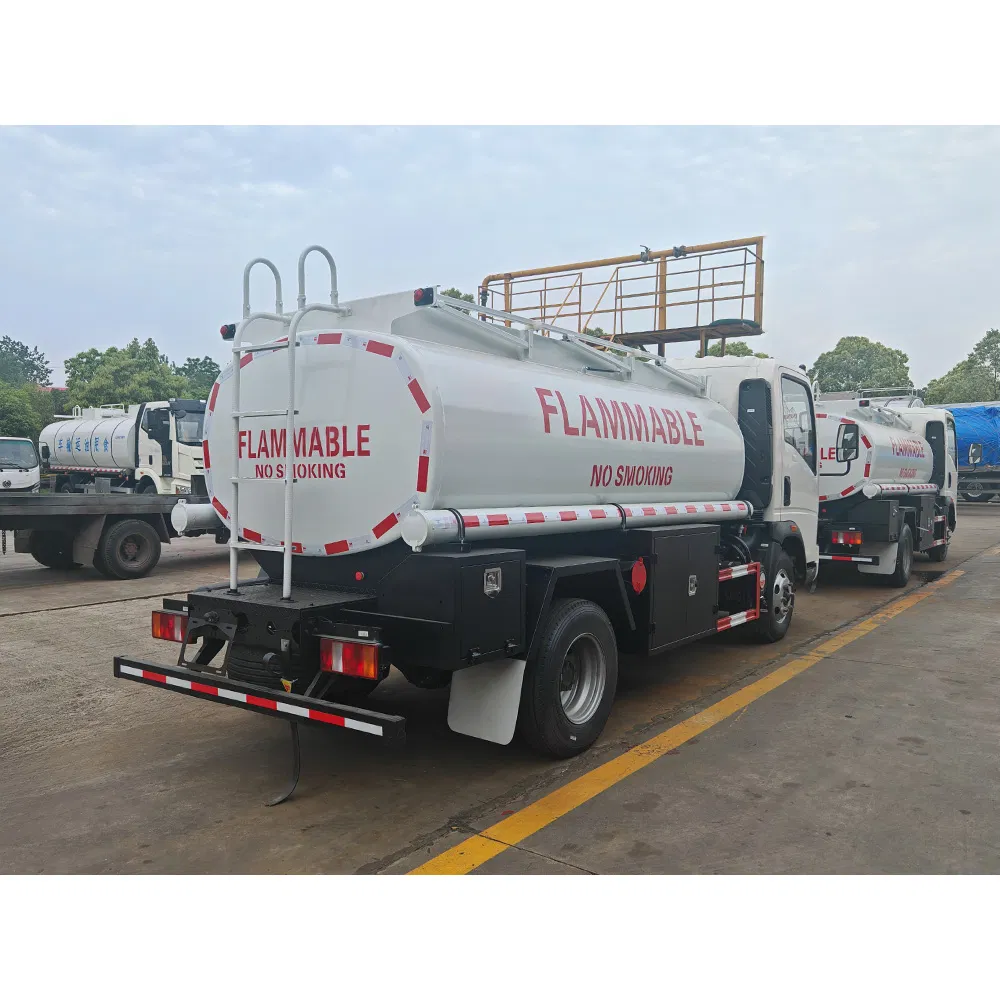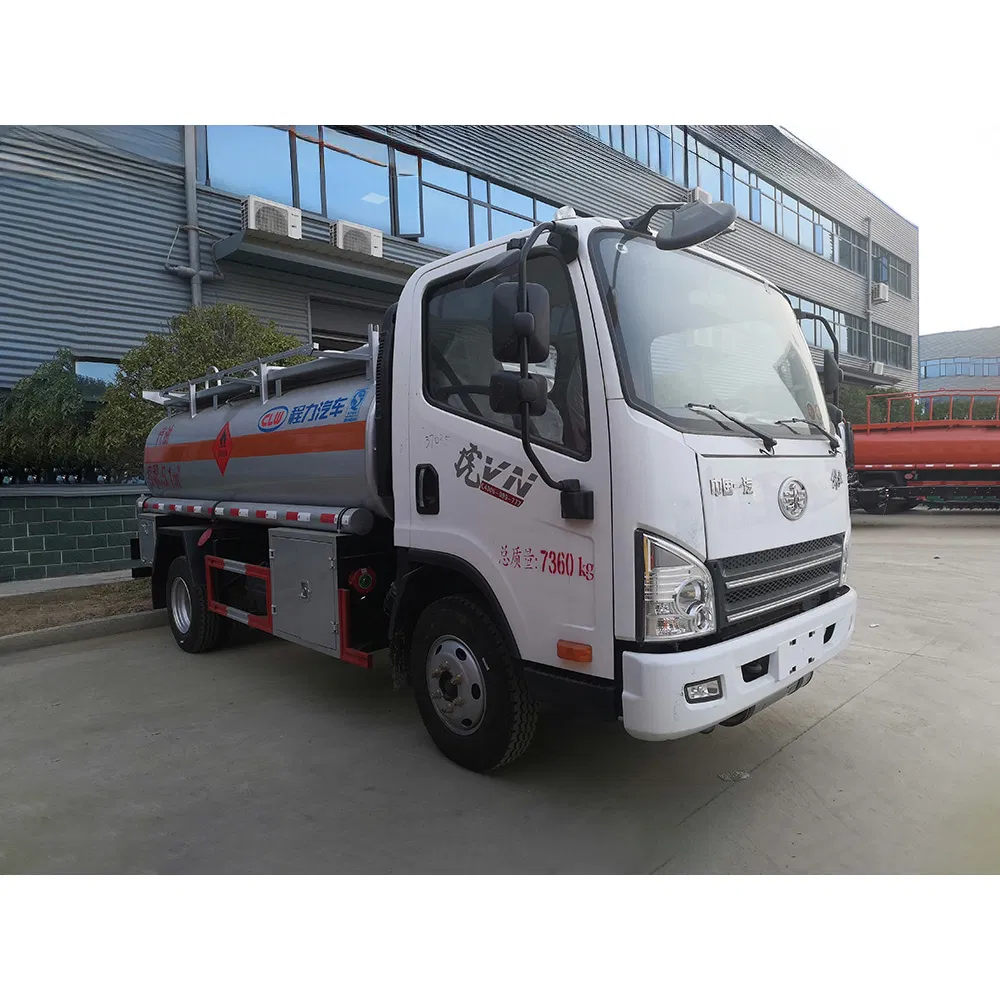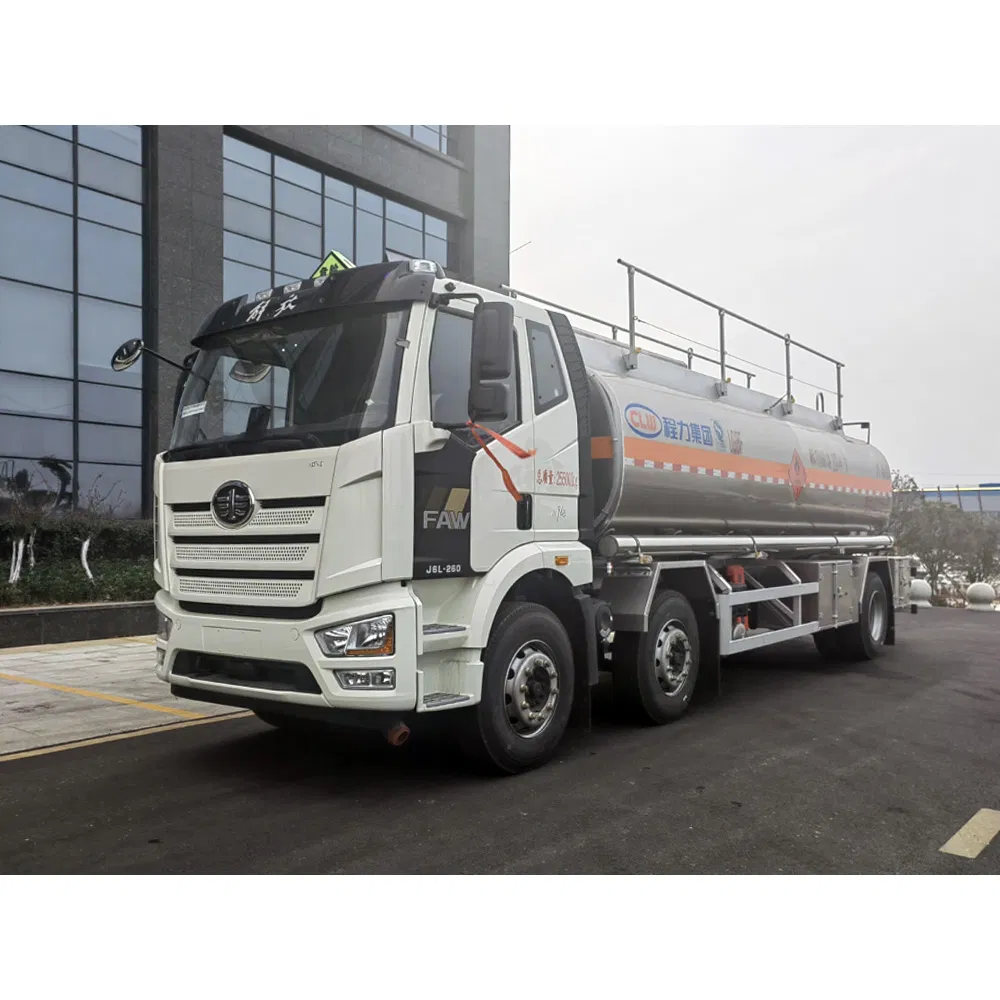
Fuel Tanker Capacity Tiers: Rigid Trucks (5k–35k L) vs Semi-Trailers (40k–50k L)
Fuel tanker capacity scales strictly with axle count because liquid fuel weight quickly hits legal highway bridge and pavement limits before the tank looks physically oversized. Moving up from a rigid delivery vehicle to an articulated semi-trailer lowers transport cost per litre on long trunk corridors, but sacrifices manoeuvrability inside urban retail stations and rural mine sites.
| Capacity Bracket (Litres) | Vehicle & Axle Configuration | Typical Compartments | Best-Fit Route & Fleet Role | Actions |
|---|---|---|---|---|
| 5,000 – 8,000 L | 4x2 Light/Medium Rigid | 1 – 2 compartments | City generator refuelling, narrow urban stations, quarry equipment bowser | View Models | Get FOB Quote |
| 10,000 – 15,000 L | 4x2 Heavy Rigid | 2 – 3 compartments | Town-level fuel distribution, construction fleets, telecom site refuelling | View Models | Get FOB Quote |
| 18,000 – 22,000 L | 6x4 Rigid (10-Wheeler) | 3 – 4 compartments | Regional multi-grade retail distribution; best balance of legal load & site access | View Models | Get FOB Quote |
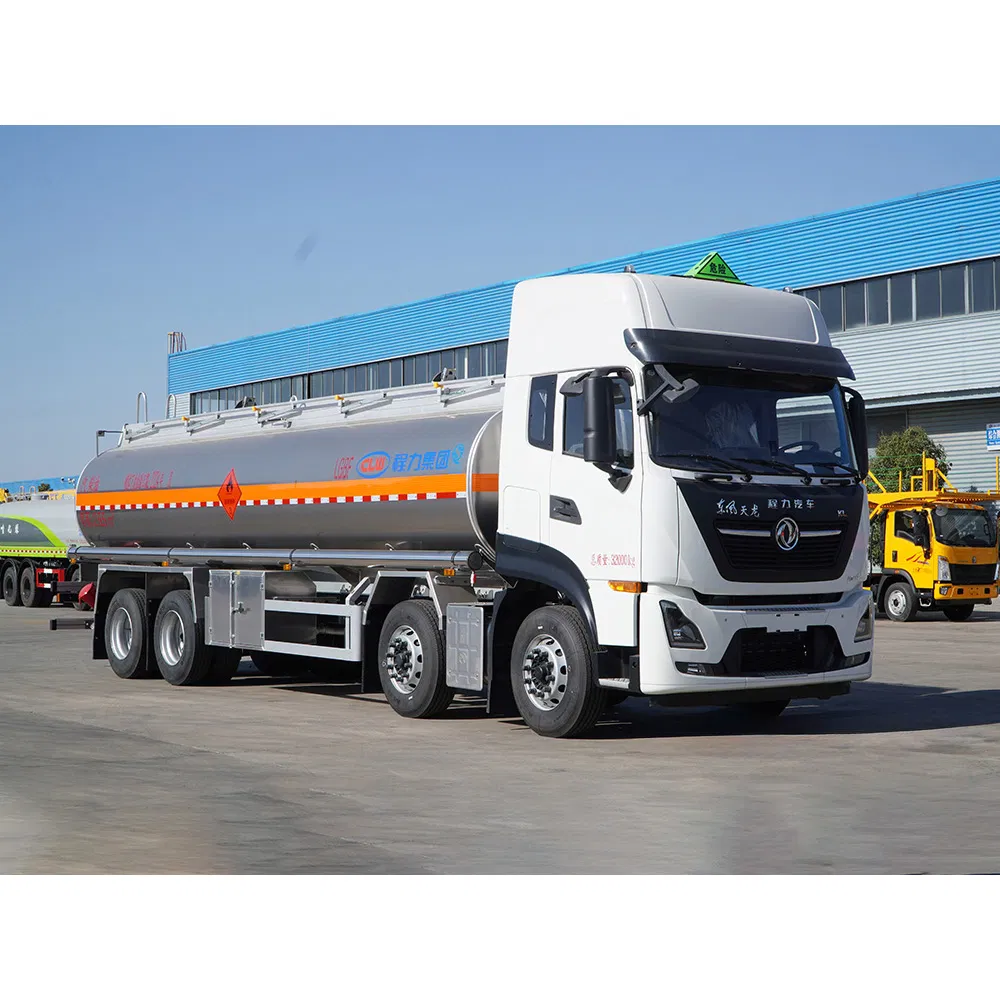
| 25,000 – 35,000 L | 8x4 Rigid (12-Wheeler) | 4 – 5 compartments | High-volume regional delivery where tight depot aprons restrict semi-trailers | View Models | Get FOB Quote |
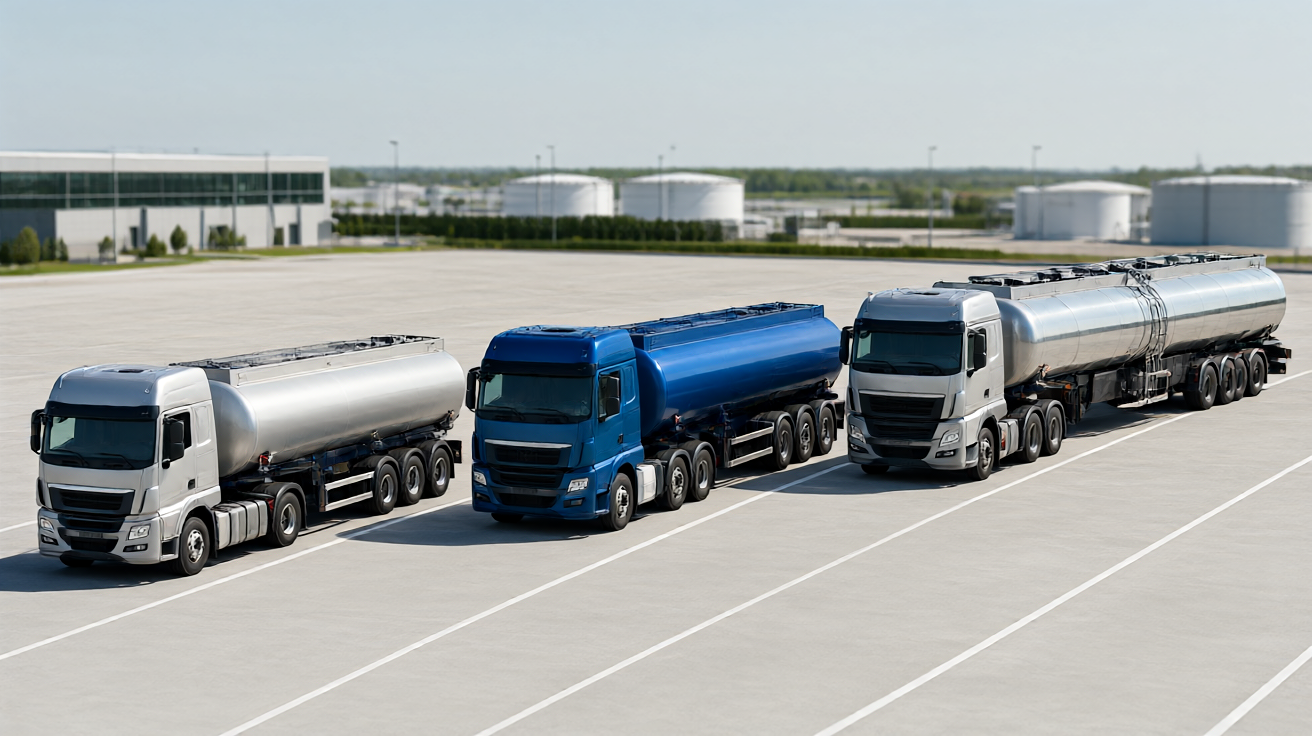
| 40,000 – 50,000 L | 6x4 Tractor + 3-Axle / 4-Axle Semi-Trailer | 4 – 6 compartments | Coastal port-to-inland depot trunk haulage (e.g., Mombasa–Kampala, Lagos–Abuja) | View Models | Get FOB Quote |
Compare rigid builds across our fuel tanker trucks collection, or explore high-volume articulated units in our fuel tanker trailers range. For a detailed breakdown of how capacity tiers affect acquisition budgets, review our fuel tanker pricing guide.
10,000 L 4x2 Urban & Site Refuelling Tanker
10,000 L | 2 Compartments | Carbon Steel | Optional Dispenser & Auto Hose Reel · Built on Sinotruk HOWO chassis · LHD / RHD
20,000 L 6x4 Multi-Compartment Regional Tanker
20,000 L | 3–4 Compartments | Q235B Steel or 5083 Aluminium | API Bottom Loading Optional · Built on Sinotruk HOWO chassis · LHD / RHD
Axle Load Limits & Fuel Density: Why Volume Doesn't Equal Weight
One of the costliest sizing errors in fuel logistics is specifying a tank volume for petrol (gasoline) without checking the truck’s legal axle weight when fully loaded with denser diesel. Buying an oversized tank that you can only legally fill to 80% creates dangerous liquid surge and wastes payload capital.
Fuel Density Math Every Fleet Buyer Must Check
Liquid petroleum products have significantly different specific gravities at ambient African temperatures:
- Petrol (PMS / Gasoline): ~0.72 – 0.75 kg/L → 20,000 L weighs ~14.8 tonnes.
- Jet A-1 / Kerosene (DPK): ~0.79 – 0.81 kg/L → 20,000 L weighs ~16.0 tonnes.
- Automotive Diesel (AGO): ~0.83 – 0.85 kg/L → 20,000 L weighs ~16.8 tonnes.
- Heavy Fuel Oil (HFO): ~0.92 – 0.96 kg/L → 20,000 L weighs ~18.8 tonnes.
A 30,000 L load of diesel weighs roughly 25.2 tonnes of cargo alone—add a ~12–13 tonne carbon-steel 8x4 truck tare weight, and gross vehicle weight reaches 37 to 38+ tonnes.
Regional Weighbridge Realities (East vs. West Africa)
- East African Community (Kenya, Tanzania, Uganda, Rwanda): Strict weighbridge networks enforce axle-group limits (typically 8 t steer axle, 18 t tandem drive axle, 24 t tridem trailer axle, up to 56 t gross on compliant 6-axle/7-axle articulated combinations). In Kenya and Tanzania, a 6x4 rigid tanker comfortably carries 18,000 L to 20,000 L legally; pushing above 22,000 L on a 6x4 steel tank frequently triggers rear tandem overload fines unless switched to a lighter 5083 aluminium tank or upgraded to an 8x4 chassis.
- West Africa (Nigeria, Ghana, Ivory Coast): Highway corridors under ECOWAS harmonization and Nigerian trunk depots heavily favour 20,000 L (6x4) and 33,000 L (8x4 rigid or 3-axle trailer) for mid-tier drops, and 40,000 L to 45,000 L tri-axle semi-trailers for coastal Apapa/Warri depot-to-inland haulage. Switching from carbon steel to 5083 aluminium on a 45,000 L trailer trims roughly 2.5 to 3.5 tonnes of tare weight—allowing ~3,000 to 4,000 extra legal litres of diesel on weighed corridors.
30,000 L 8x4 High-Capacity Rigid Fuel Tanker
30,000 L | 4–5 Compartments | 5083 Aluminium or Carbon Steel | Bottom Loading Optional · Built on Shacman chassis · LHD / RHD
Multi-Compartment Design: Sizing Baffles & Partitions for Mixed Drops
Total tank capacity is only half the specification—how you divide that volume into sealed compartments determines your route flexibility, load stability, and unloading speed. Running a large single-compartment tank partially filled on winding roads creates violent front-to-back liquid slosh that degrades braking distance and raises rollover risk.
How to Plan Compartment Splits
- Match Underground Station Tanks: Most retail forecourts order in multiples of 5,000 L, 10,000 L, or 15,000 L (for example, 10,000 L PMS + 10,000 L AGO, or 15,000 L PMS + 10,000 L AGO + 5,000 L DPK). Designing a 20,000 L 6x4 tanker as 4 × 5,000 L or 5,000 / 5,000 / 10,000 L lets you discharge sealed, metered full compartments without partial-drop disputes.
- Preserve Axle Balance During Multi-Drop Unloading: If a 4-compartment tanker empties the rear two compartments first at Station A, the front steer axle becomes overloaded while rear drive traction drops. Standard fleet procedure—and compartment sizing—should allow drivers to unload symmetrically (front/rear balance) or place smaller drop compartments toward the middle.
- Internal Surge Baffles & Ullage Allowance: Any individual compartment larger than 5,000 L to 7,500 L requires internal perforated anti-wave baffles spaced roughly every 1.4–1.6 metres to dampen surge forces. Furthermore, gross geometric tank volume must include 3% to 5% ullage (expansion headspace) so hot tropical fuel expands safely without triggering pressure-relief vents.
- Independent Discharge Piping: Multi-grade haulers moving petrol and diesel together must specify completely separate bottom discharge lines and dedicated API adaptors (optional metering packages available) to prevent costly cross-contamination.
45,000 L 3-Axle Fuel Tanker Semi-Trailer
45,000 L | 5–6 Compartments | Carbon Steel or 5083 Aluminium | Heavy Mechanical or Air Suspension · Pairs with 6x4 tractor built on Sinotruk HOWO or Shacman chassis · LHD / RHD
Matching Tank Capacity to Route Access & Depot Forecourts
Even when highway axle laws permit a 45,000 L semi-trailer, physical site geometry at the loading gantry or unloading station often dictates a rigid capacity ceiling. Surveying your tightest delivery point before locking in tank length prevents expensive double-handling.
- Urban Petrol Stations & Tight Corners (5,000 L – 20,000 L): Older inner-city retail stations in Lagos, Nairobi, Kampala, or Dar es Salaam frequently have narrow entry aprons, overhead canopy clearances under 4.2 m, and busy roadside traffic that makes reversing a 13-metre articulated trailer unsafe or illegal during daytime hours. A 10,000 L 4x2 or 20,000 L 6x4 (overall length ~8.5–9.5 m) enters and exits cleanly in one pass.
- Unpaved Mining, Forestry & Agricultural Sites (10,000 L – 22,000 L): Steep quarry ramps, corrugated laterite tracks, and muddy rainy-season roads punish long-wheelbase 8x4 chassis and low-clearance semi-trailers. A compact 10,000 L–20,000 L 6x4 (or 6x6 all-wheel-drive bowser) with high ground clearance and reinforced leaf-spring suspension delivers reliable site uptime. Explore reliable heavy platforms on our Sinotruk HOWO chassis overview.
- Intercity Depot Trunking (30,000 L – 50,000 L): On paved highways running 200 km to 1,500 km between coastal import terminals and inland storage depots, articulated 40,000 L to 50,000 L fuel semi-trailers cut driver wages and fuel burn per delivered litre by 30% to 45% compared with running two separate 20,000 L rigid trucks.
- Bottom-Loading Gantry Compatibility: Before ordering a 20,000 L to 50,000 L unit, verify whether your loading depot mandates API bottom-loading couplers, vapour recovery lines, and optical overfill sensors—and confirm overall tank height clears gantry loading arms.
Compliance & sizing note (Last updated: November 2026): Legal gross vehicle weights, axle-group limits, and dangerous-goods compartment rules are enforced by national transport authorities and change periodically. Confirm current weighbridge and petroleum-authority calibration limits in your operating country prior to finalising tank volume drawings.