Standard LPG Tanker Sizes & Real Payload Capacity
Unlike atmospheric diesel or petrol tankers where 20,000 litres of tank volume holds nearly 20,000 litres of fuel, pressurized liquefied petroleum gas (LPG) vessels are rated by geometric water volume (m³) while operating under strict thermal expansion margins. Understanding the gap between geometric volume and net legal gas tonnage prevents undersizing your cooking-gas fleet.
| Geometric Tank Volume (m³ / L) | Net Safe LPG Load (Tonnes at ~0.42 t/m³) | Typical Chassis & Drive Layout | Primary Commercial Application | Actions |
|---|---|---|---|---|
| 5 – 10 m³ (5,000 – 10,000 L) | 2.1 – 4.2 t | 4x2 Light / Medium (8–14 t GVWR) | Urban cylinder refilling, hotels, restaurants, residential bulk micro-tanks | View Models | Get FOB Quote |
| 12 – 15 m³ (12,000 – 15,000 L) | 5.0 – 6.3 t | 4x2 Heavy (16–18 t GVWR) | City-wide autogas skid stations, industrial kitchens, commercial estates | View Models | Get FOB Quote |
| 18 – 22 m³ (18,000 – 22,000 L) | 7.5 – 9.2 t | 6x4 Heavy (25 t GVWR) | Regional LPG bottling plants, multi-drop retail gas plants & distributors | View Models | Get FOB Quote |
| 24 – 25 m³ (24,000 – 25,000 L) | 10.0 – 10.5 t | 6x4 or 8x4 Heavy (25–31 t GVWR) | High-volume rigid regional transfers where articulated trailers cannot turn | View Models | Get FOB Quote |
| 40 – 60 m³ (40,000 – 60,000 L) | 16.8 – 25.2 t | 3-Axle Semi-Trailer + 6x4 Tractor | Coastal terminal to inland bottling-plant bulk trunking (e.g., Lagos–Abuja) | View Models | Get FOB Quote |
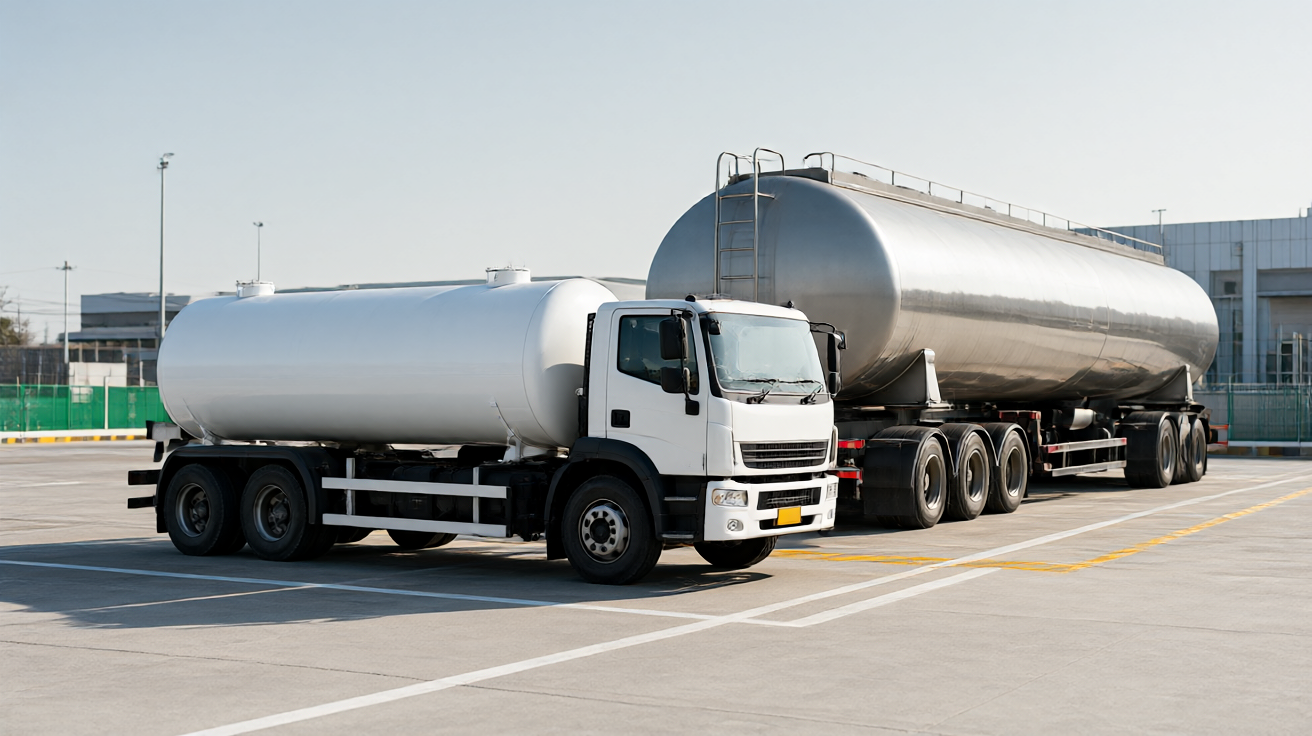
Explore complete rigid and semi-trailer builds on our dedicated LPG trucks & tankers hub to match your local bottling-plant demand.
10 m³ 4x2 Urban LPG Delivery Tanker
10 m³ (~4.2 t LPG) | Q345R Pressure Vessel | Optional LPG Pump, Meter & Filling Scale · Built on Sinotruk HOWO chassis · LHD / RHD
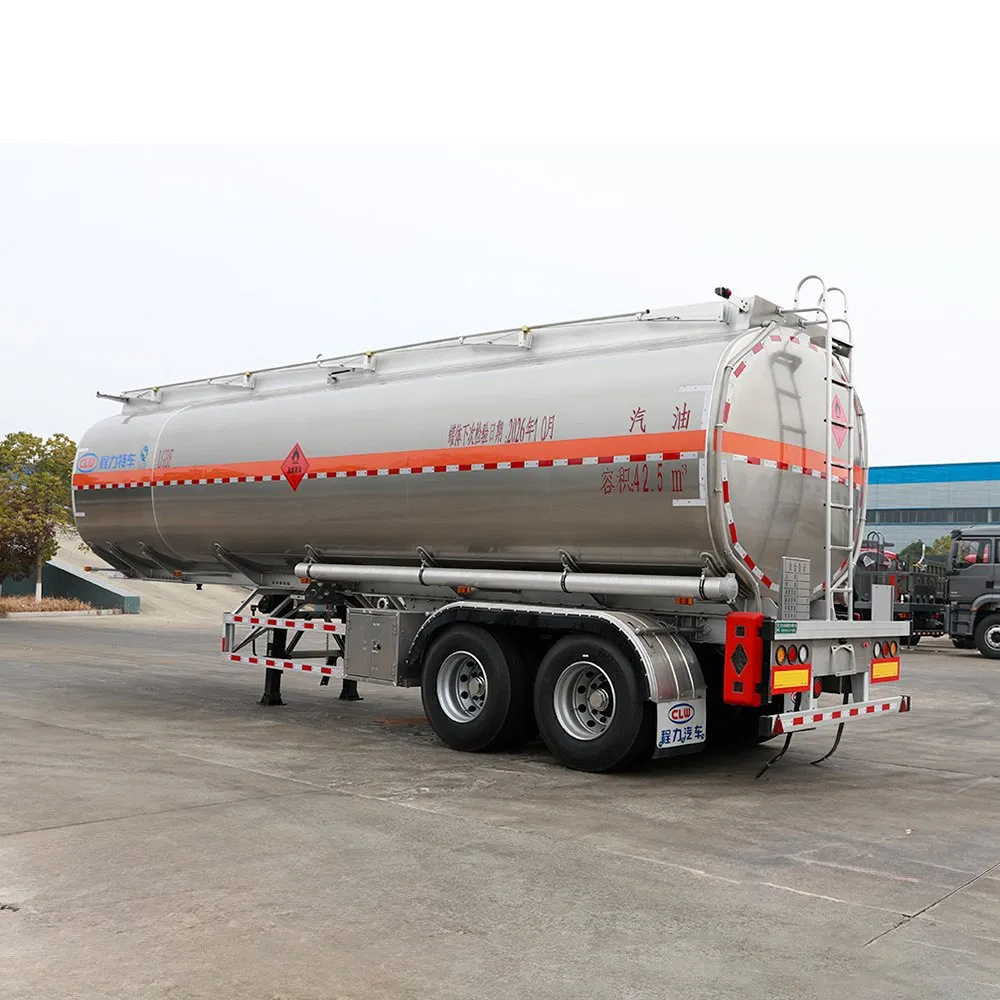
20 m³ 6x4 Regional LPG Bobtail
20 m³ (~8.4 t LPG) | 1.61–1.77 MPa Design Pressure | Emergency Shut-Off Valves & Hose Reel · Built on Sinotruk HOWO chassis · LHD / RHD
Why LPG Tanks Only Fill to 80%–85% (Payload Math Explained)
Liquid petroleum gas expands significantly more than water or diesel when ambient temperatures rise from cool morning loading to 40°C+ African afternoon sun. Overfilling a pressurized vessel leaves no vapour headspace for liquid expansion, triggering hydrostatic over-pressure and forcing safety relief valves to vent flammable gas.
- The 0.42 Tonne/m³ Industry Factor: Commercial cooking gas is a blend of propane (~0.51 kg/L liquid density) and butane (~0.58 kg/L liquid density). Under standard pressure-vessel safety rules for propane-rich mixes at 50°C maximum design temperature, the legal filling factor is approximately 0.42 metric tonnes per cubic metre (t/m³)—corresponding to roughly 80% to 85% maximum liquid volume.
- Practical Sizing Example: If your Nigerian or Kenyan gas plant needs to deliver 10 metric tonnes of LPG per rigid truck run, you must order a 24 m³ to 25 m³ vessel—not a 10 m³ or 15 m³ tank. Similarly, moving 20 metric tonnes of bulk LPG on trunk highways requires a 48 m³ to 52 m³ tri-axle semi-trailer.
- Cylinder Refilling Equivalent: A 10 m³ (~4.2 t) urban bobtail refills roughly 330 standard 12.5 kg domestic gas cylinders per full load, whereas a 20 m³ (~8.4 t) regional tanker supplies roughly 670 cylinders per trip.
Core Safety Valves, Metering & Transfer Hardware
Because LPG travels as a flammable liquefied gas under constant internal pressure (typically 0.6 to 1.2 MPa in service, engineered to 1.61–1.77 MPa design pressure), upper-body safety valves and transfer piping are non-negotiable engineering essentials.
Mandatory Safety & Monitoring Equipment
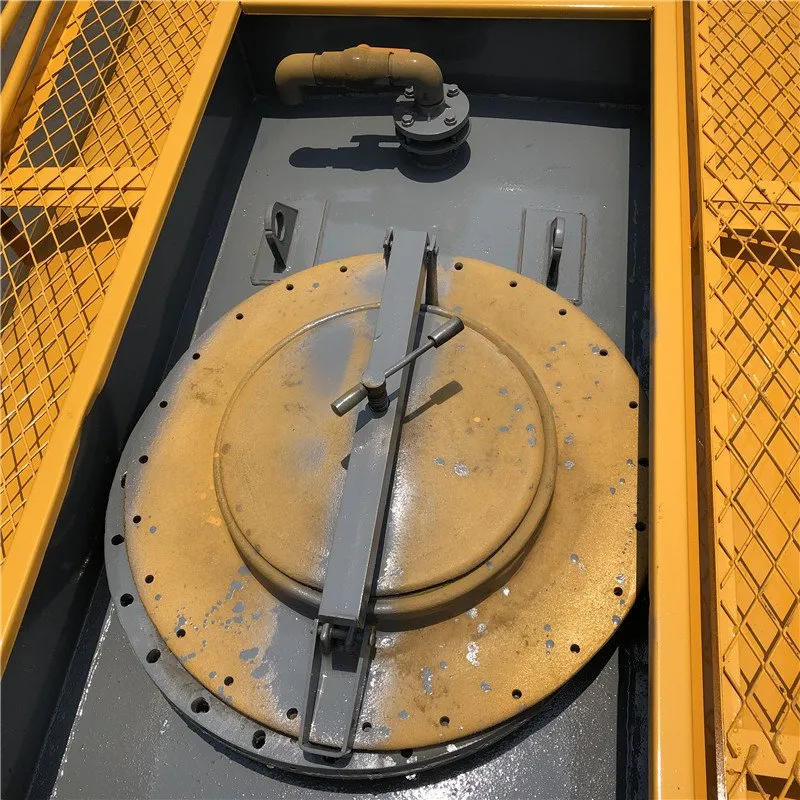
- Spring-Loaded Safety Relief Valves: Recessed into the top of the vessel (protected by a roll-over crash guard) to vent excess vapour automatically if internal pressure spikes above set limits.
- Internal Emergency Shut-Off Valves (ESV): Mounted directly inside the liquid and vapour tank nozzles. Operated pneumatically or by cable with fusible links (melting at ~70°C in a fire), these valves slam shut instantly if a hose tears away or an emergency stop button is hit at the cab or rear cabinet.
- Level, Pressure & Temperature Gauges: Every vessel incorporates a magnetic float liquid-level gauge (such as Rochester-type dial gauges, brands optional), a rotary slip-tube level indicator, dual pressure gauges, and an immersion thermometer so operators never exceed the 80%–85% fill ceiling.
- Anti-Static & Fire Protection: Twin anti-static grounding reels, copper bonding straps across flange joints, front-mounted exhaust with spark arrestor, master battery disconnect switch, and two dry-powder fire extinguishers.
Pumping, Metering & Dispensing Options (Optional Brands)
Transfer hardware sits inside a lockable, ventilated rear or side steel cabinet and is configured to your business model (bulk tank transfer vs. direct cylinder refilling):
- LPG Transfer Pump: PTO-driven or hydraulic-driven sliding-vane LPG pumps (Chinese heavy-duty pumps or international brands such as Corken or Blackmer available as optional builds) paired with a differential bypass valve.
- Flow Metering System: Choose between a mechanical volumetric flow meter with vapour eliminator, a digital electronic dispenser with ticket printer, or a high-accuracy Coriolis mass flow meter (optional) that measures exact kilogrammes regardless of ambient temperature fluctuations.
- Hose Reels & Cylinder Scales: Heavy-duty 15–30 m liquid/vapour transfer hose reels with quick-disconnect Acme couplings, plus optional electronic filling scales for mobile cylinder-refilling routes.
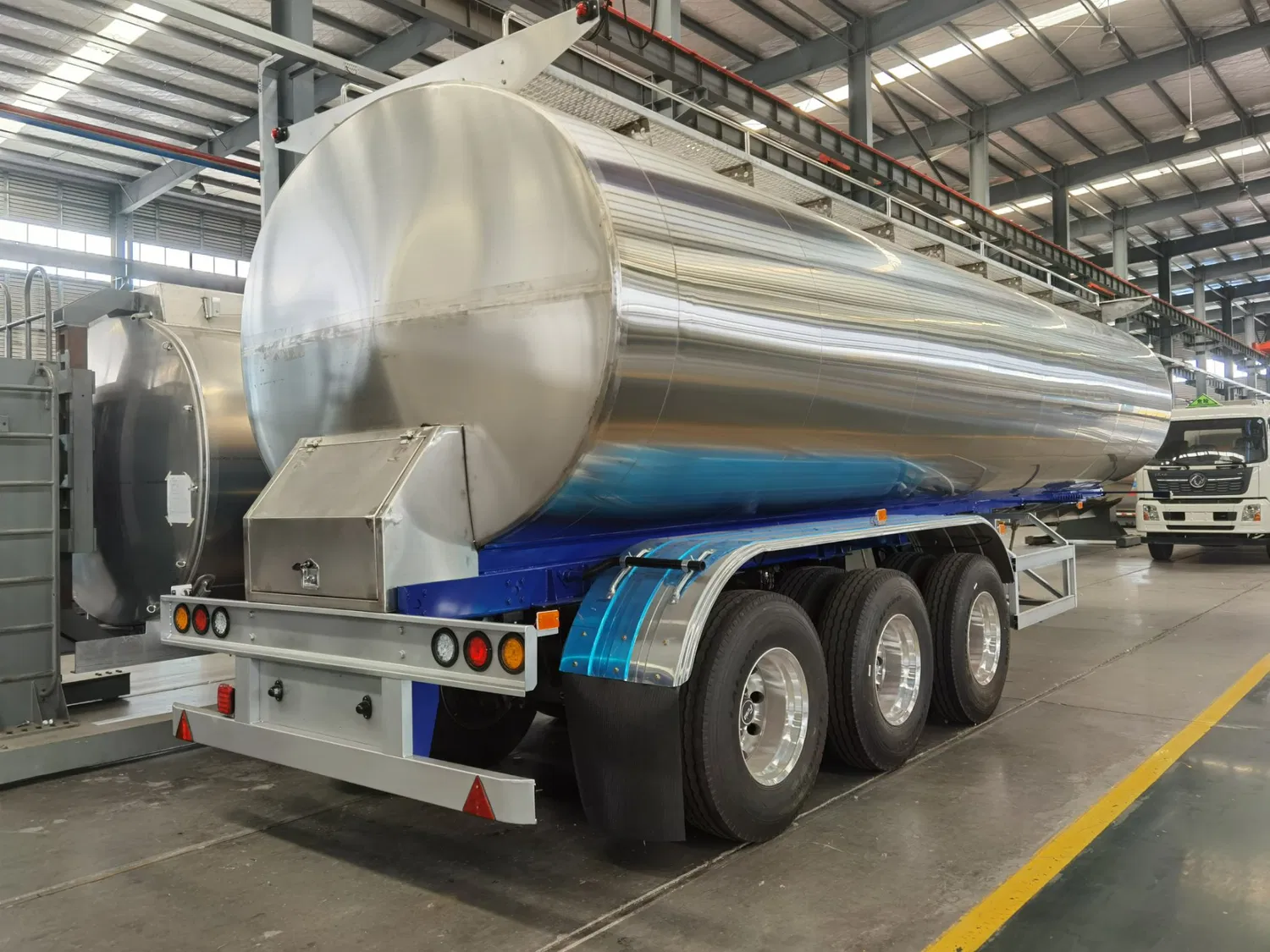
25 m³ 6x4 High-Capacity LPG Delivery Tanker
25 m³ (~10.5 t LPG) | Q345R / Q370R Vessel | Optional Coriolis Mass Meter & Auto Hose Reel · Built on Shacman chassis · LHD / RHD
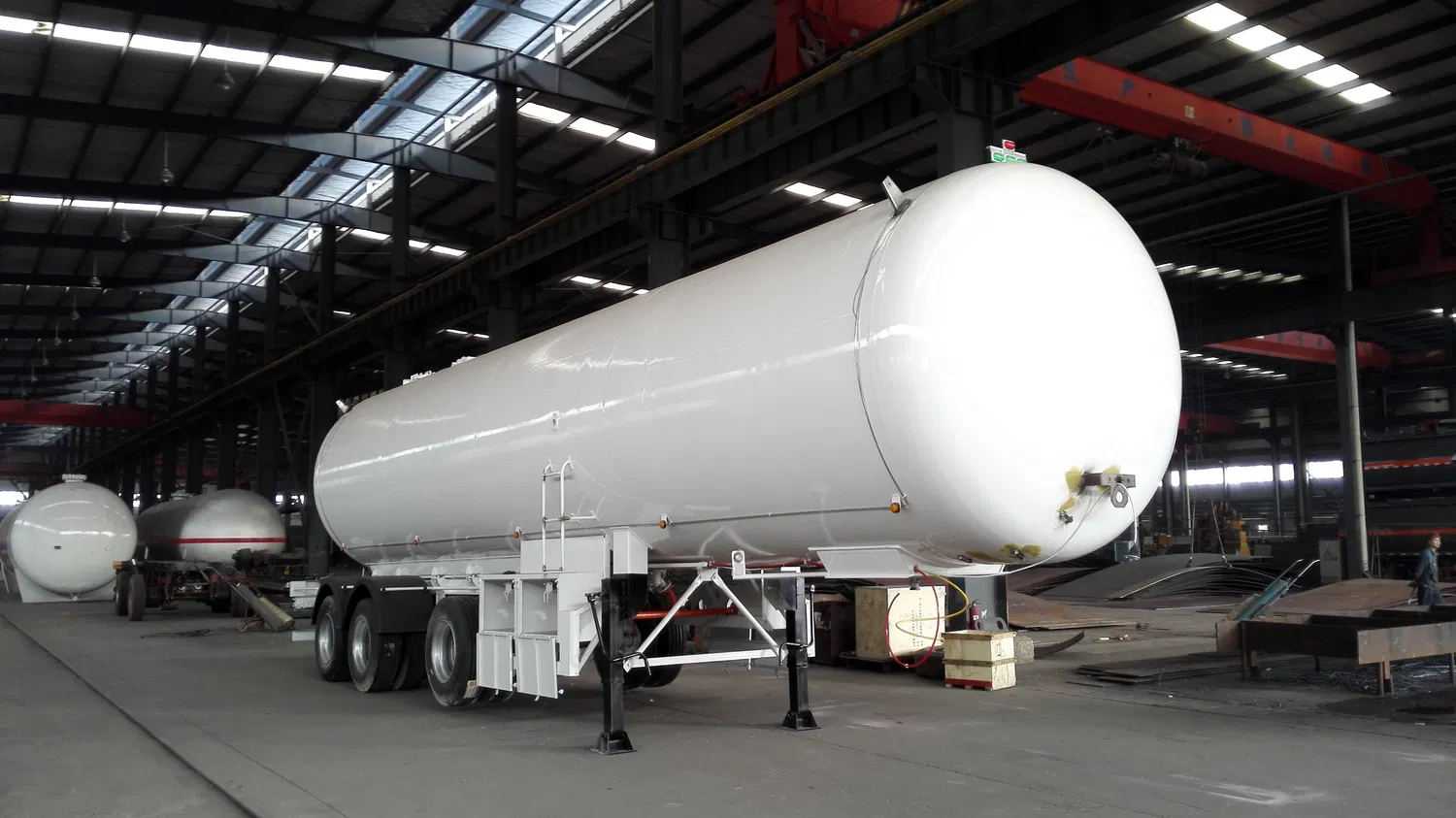
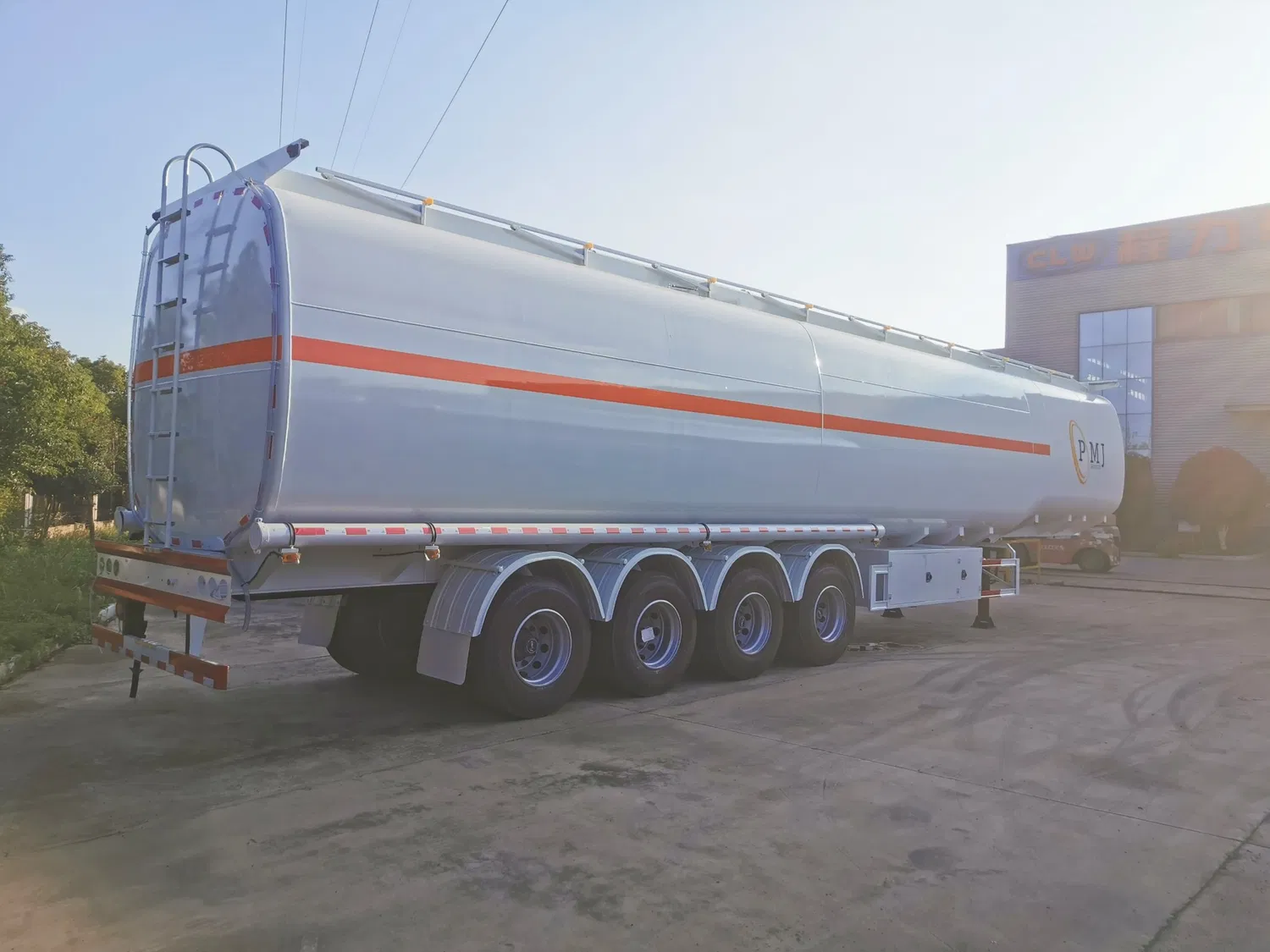
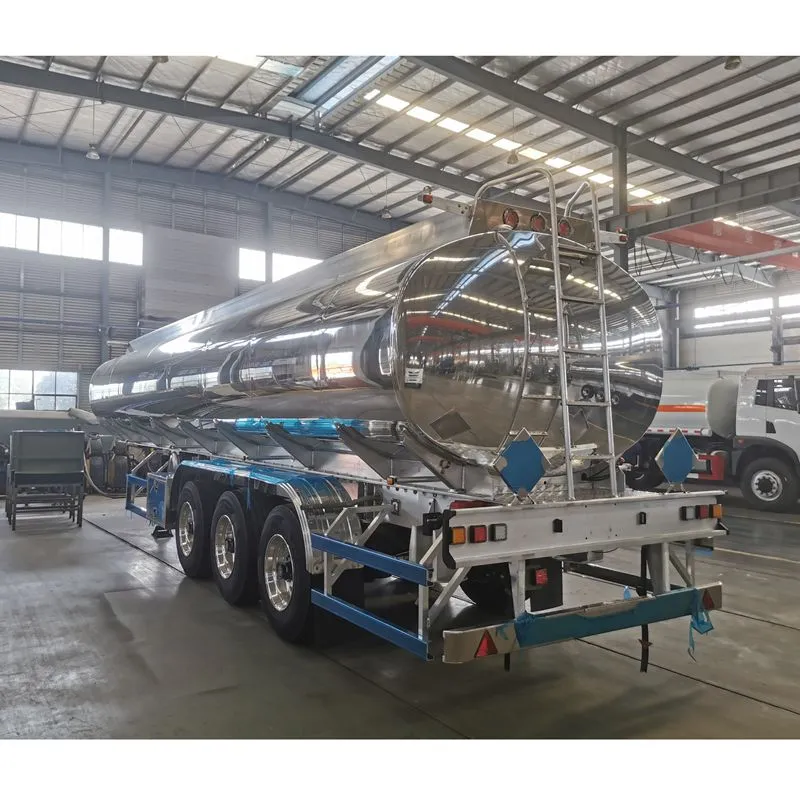
50 m³ 3-Axle Bulk LPG Tanker Semi-Trailer
50 m³ (~21 t LPG) | Internal Safety Valves | Optional Sun Shield & Mechanical/Air Suspension · Pairs with 6x4 tractor built on Sinotruk HOWO or Shacman chassis · LHD / RHD
Pressure Vessel Standards & Factory Inspection Documentation
Pressure vessels face much stricter import and national licensing scrutiny than ordinary cargo trucks. Confirming the vessel design code and factory test dossier before steel cutting begins prevents costly customs holds or local gas-authority rejections.
Design Codes & Steel Specifications
- Vessel Steel & Heat Treatment: Tanks are fabricated from certified pressure-vessel carbon-manganese steel (Q345R or high-strength Q370R), typically 10 mm to 14 mm thick depending on tank diameter and design code. Completed vessels undergo full post-weld heat treatment (PWHT) in an annealing furnace to relieve residual weld stress.
- GB Standard vs. ASME Code (Optional): Standard export vessels are built to China’s national pressure vessel code (GB/T 150 & TSG 2107), widely accepted across West and East Africa when accompanied by accredited third-party inspection reports. For multinational oil-company tenders or markets requiring US code certification, ASME Section VIII Div. 1 (U-Stamp) fabrication can be arranged as an optional build with longer production lead time.
Factory Testing & Inspection Dossier Supplied
Every completed LPG vessel leaves the factory with a verifiable pressure-vessel quality package, including:
- 100% Radiographic (X-Ray) & Ultrasonic Weld NDT Reports on all longitudinal and circumferential seams.
- Hydrostatic Pressure Test Certificate (tested above design pressure) and Pneumatic Airtightness Leak Test Report.
- Steel Plate Mill Test Certificates (MTC) verifying chemical composition and mechanical strength of every shell plate.
- Safety Relief Valve Calibration Certificate and Tank Volume Calibration Table.
- Third-Party Inspection Coordination (such as SGS, Bureau Veritas, or Intertek, optional per buyer request) prior to vessel purging and port dispatch.
Regulatory & Compliance Notice (Last updated: November 2026): Factory pressure-vessel certificates confirm compliance with the specified manufacturing code (GB or optional ASME). Local operating licences, national petroleum/gas regulator approvals (such as NMDPRA in Nigeria or EPRA in Kenya), road-worthiness registration, and periodic local re-testing remain the buyer’s responsibility—always verify exact local code acceptance with your national gas authority before placing a fabrication order.